
Thermodynamics: The Hidden Force That Runs Everything You Touch, See and Feel


Thermodynamics
Your morning coffee cooling on the counter, the engine in your car, the ice melting in your glass, and even your own body staying warm on a cold day are all governed by the same set of physical laws. That set of laws is thermodynamics, the branch of science that explains how energy moves, changes form, and ultimately shapes almost everything that happens in the physical world.
This guide walks through thermodynamics from the ground up. You will learn what it actually means, the four laws that define it, how those laws show up in everyday life, and why understanding this single branch of physics helps explain everything from why refrigerators work to why perpetual motion machines are impossible.
What Is Thermodynamics?
The Basic Definition
Thermodynamics is the branch of physics that studies energy, specifically how it is transferred, transformed, and conserved within physical systems, and how these energy changes relate to heat, work, temperature, and entropy.
In simpler terms, thermodynamics answers a single core question: when energy moves from one place to another, or changes from one form into another, what rules must it follow? Every steam engine, refrigerator, power plant, and living cell operates within the boundaries these rules set.
The word itself comes from the Greek words "therme," meaning heat, and "dynamis," meaning power. Thermodynamics was originally developed in the 1800s to understand how heat could be converted into mechanical work, largely driven by the practical need to improve steam engines during the Industrial Revolution.
Systems, Surroundings, and Boundaries
Before the laws of thermodynamics make sense, it helps to understand three basic terms that appear throughout the subject.
- System: The specific part of the universe being studied, such as the gas inside a piston or the water in a kettle.
- Surroundings: Everything outside the system that can exchange energy or matter with it.
- Boundary: The real or imaginary line separating the system from its surroundings.
Systems are further classified based on what they can exchange with their surroundings. An open system can exchange both matter and energy, such as a pot of boiling water losing steam. A closed system can exchange energy but not matter, such as a sealed can being heated. An isolated system exchanges neither matter nor energy, an idealized concept used mainly in theoretical discussions, since a perfectly isolated system does not truly exist in practice.
The Four Laws of Thermodynamics Explained
Thermodynamics is built on four fundamental laws. Interestingly, they are numbered zero through three, because the "Zeroth Law" was identified after the First and Second Laws were already established, yet it was considered so fundamental that it needed to come first logically.
The Zeroth Law of Thermodynamics: Defining Temperature
The Zeroth Law states that if two systems are each in thermal equilibrium with a third system, then they are also in thermal equilibrium with each other.
This sounds abstract, but it is the reason a thermometer works at all. When you place a thermometer against your skin and wait for the reading to stabilize, you are waiting for the thermometer and your skin to reach thermal equilibrium, meaning no more heat flows between them. Because the thermometer was itself calibrated using a third reference system, this law guarantees that the number displayed accurately reflects your body's temperature.
Without the Zeroth Law, the entire concept of a consistent, comparable temperature scale would not have a logical foundation.
The First Law of Thermodynamics: Conservation of Energy
The First Law states that energy cannot be created or destroyed, only transformed from one form to another or transferred between a system and its surroundings. It is often written as:
ΔU = Q − W
Where ΔU is the change in a system's internal energy, Q is the heat added to the system, and W is the work done by the system on its surroundings.
This is simply the principle of conservation of energy applied specifically to heat and work. If you add heat to a gas inside a cylinder, that energy has to go somewhere. Some of it can raise the internal energy of the gas, and some of it can be used to push a piston outward, doing mechanical work. The total energy in and out must always balance.
This law is why "perpetual motion machines," devices that supposedly produce more energy than they consume, are considered physically impossible. Every credible scientific and engineering body treats such claims as violations of a law that has never once been experimentally disproven.
The Second Law of Thermodynamics: Entropy Always Increases
The Second Law states that the total entropy of an isolated system can never decrease over time. Entropy is a measure of disorder, or more precisely, the number of ways energy can be distributed within a system.
This law explains why certain processes only happen in one direction. Heat flows naturally from a hot object to a cold one, never spontaneously the other way around. An ice cube melts in a warm room; a puddle of water never spontaneously refreezes into an ice cube on its own at room temperature. Perfume spreads through a room; it never spontaneously gathers itself back into the bottle.
This is also why no engine, no matter how well designed, can convert 100 percent of heat energy into useful work. Some energy is always lost as unusable heat, spreading out into the surroundings and increasing overall entropy. This principle sets a hard theoretical ceiling on the efficiency of every heat engine ever built, from a car engine to a power station turbine.
The Third Law of Thermodynamics: Absolute Zero
The Third Law states that as the temperature of a perfect crystal approaches absolute zero (0 Kelvin, or −273.15°C), its entropy approaches a minimum, constant value.
In practical terms, this law explains why absolute zero can never actually be reached in a real physical experiment, only approached extremely closely. As a substance gets colder and colder, removing additional energy becomes progressively harder, because there is less and less thermal energy left to remove. Scientists have cooled matter to within a fraction of a degree of absolute zero using advanced laser cooling techniques, but reaching the exact value remains physically impossible according to this law.
How Thermodynamics Explains Everyday Life
Why Your Coffee Gets Cold
A hot cup of coffee left on a counter cools down because of the Second Law of Thermodynamics. Heat naturally flows from the higher-temperature coffee to the lower-temperature air in the room until both reach thermal equilibrium, the same equilibrium concept described in the Zeroth Law. This is also why a coffee mug with a lid retains heat longer, since it slows the rate of heat transfer to the surrounding air without violating any thermodynamic law.
Why a Refrigerator Feels Like It Breaks the Rules (But Doesn't)
At first glance, a refrigerator seems to violate the Second Law, since it moves heat from a cold interior to a warmer kitchen, which is the opposite of the natural direction heat normally flows. The resolution is that a refrigerator is not an isolated system. It uses electrical energy to power a compressor that forces this heat transfer to happen, and in doing so, it releases even more total heat into the surrounding kitchen air than it removes from inside, meaning the total entropy of the refrigerator plus its surroundings still increases overall, keeping the Second Law fully intact.
Why Car Engines Are Never 100 Percent Efficient
An internal combustion engine converts the chemical energy in fuel into mechanical work, but a significant portion of that energy is always lost as waste heat through the exhaust and engine block, exactly as the Second Law predicts. This is why engineers describe engine performance using thermal efficiency, typically in the range of 20 to 40 percent for a standard gasoline engine, rather than assuming all the fuel's energy becomes usable motion.
Real-World Applications of Thermodynamics
Power Generation
Every major method of generating electricity, whether from coal, natural gas, nuclear fission, or geothermal heat, relies on the same basic thermodynamic cycle: heat is used to boil water into steam, the steam expands and drives a turbine, and the turbine spins a generator to produce electricity. The maximum theoretical efficiency of this process is governed directly by the Second Law, specifically through a concept called the Carnot efficiency, which depends only on the temperature difference between the heat source and the heat sink.
Refrigeration and Air Conditioning
Refrigerators, air conditioners, and heat pumps are all practical engineering applications of the same principle described above: using external work to move heat against its natural direction of flow. Understanding this thermodynamic cycle is essential for engineers designing systems that need to be as energy-efficient as possible, since every unit of work used to move heat has real financial and environmental cost.
Chemical Reactions and Industrial Processes
Thermodynamics determines whether a chemical reaction will happen spontaneously and how much useful energy it can release, using a related concept called Gibbs free energy. Chemical engineers use thermodynamic principles to design industrial processes, such as the Haber process for producing ammonia fertilizer, by calculating the exact temperature and pressure conditions that make the reaction both fast enough and energetically favorable enough to be commercially viable.
Biology and the Human Body
Living organisms are open thermodynamic systems that constantly exchange energy and matter with their environment to stay alive. The human body follows the First Law by converting the chemical energy in food into heat, mechanical work (like muscle movement), and stored energy, and it follows the Second Law by continuously generating entropy, which is part of why living systems require a constant input of energy just to maintain their organized, low-entropy state.
Case Study: The Steam Engine and the Birth of Thermodynamics
The historical development of thermodynamics offers one of the clearest illustrations of how these abstract laws emerged from a very practical problem.
In the early 1800s, steam engines were already powering factories and locomotives, but engineers had no theoretical framework explaining why some engine designs were more efficient than others. In 1824, French engineer Sadi Carnot published a study analyzing the maximum possible efficiency of a heat engine operating between two temperatures. Carnot's work showed that even a perfectly designed, frictionless engine could never convert all of its heat input into useful work, a conclusion that would later be formalized as a direct consequence of the Second Law of Thermodynamics.
This case matters because it demonstrates something important about thermodynamics as a science: it did not begin as pure theory. It began as an attempt to solve a real engineering problem, and the answer to that problem revealed a fundamental limit built into the structure of the physical universe itself, one that still applies to every power plant, engine, and turbine built today, nearly two centuries later.
Common Misconceptions About Thermodynamics
- "Heat and temperature are the same thing." Temperature measures the average kinetic energy of particles in a substance, while heat refers to the energy actually transferred between systems due to a temperature difference. A small cup of boiling water and a large swimming pool of lukewarm water can transfer very different amounts of heat despite the cup having a higher temperature.
- "Entropy always means increasing chaos or mess." Entropy specifically refers to the number of ways energy and matter can be arranged within a system, not messiness in an everyday sense. A gas expanding to fill a container has higher entropy than the same gas compressed into a corner, but this is a precise physical concept, not simply visual disorder.
- "The Second Law means order can never increase anywhere." The Second Law applies to isolated systems as a whole. Local pockets of order, such as a growing plant or a freezing ice cube, can absolutely form, as long as the total entropy of the system and its surroundings combined still increases, which is exactly what happens in both of those examples.
- "Perpetual motion machines just haven't been invented yet." Every rigorously tested perpetual motion claim in recorded scientific history has failed, and doing so would require violating either the First or Second Law. Patent offices in multiple countries, including the United States, now generally require a working model before considering applications claiming perpetual motion, specifically because of this well-established scientific principle.
Thermodynamics vs Heat Transfer: What Is the Difference?
These two subjects are closely related but distinct, and the difference is a common source of confusion for students.
- Thermodynamics focuses on the equilibrium states of a system and the overall energy balance between the beginning and end of a process, without necessarily describing how quickly that process happens.
- Heat transfer focuses specifically on the rate and mechanism by which heat moves, through conduction, convection, or radiation, and is essential for practical engineering design questions like how quickly a building will lose heat in winter.
In practice, thermodynamics tells you whether and how much energy will move, while heat transfer tells you how fast it will move and by what physical mechanism, and engineers typically need both fields together to design real, working systems.
Frequently Asked Questions
What is the simplest way to understand thermodynamics?
Thermodynamics can be understood as the science of energy bookkeeping. It tracks where energy comes from, where it goes, and what forms it takes, while ensuring the total amount is always conserved and that certain processes only happen in one natural direction due to entropy.
Why can't we reach absolute zero?
According to the Third Law of Thermodynamics, as a system gets closer to absolute zero, removing additional energy becomes progressively more difficult, requiring an infinite number of steps to reach the exact value. Scientists have gotten extremely close using advanced cooling techniques, but reaching absolute zero exactly remains physically impossible.
Is thermodynamics only relevant to physics and engineering?
No. Thermodynamic principles apply directly to chemistry (reaction spontaneity), biology (metabolism and energy in living systems), environmental science (climate and energy systems), and even information theory, where entropy has a closely related mathematical meaning describing the unpredictability of information.
What is the difference between a reversible and an irreversible process?
A reversible process is an idealized process that can be reversed without leaving any net change in the system or surroundings, and it represents the maximum possible efficiency for a given process. An irreversible process, which includes virtually every real-world process, generates additional entropy and cannot be perfectly undone, which is why real engines are always somewhat less efficient than the theoretical maximum.
Does the Second Law of Thermodynamics mean the universe will eventually "run out" of usable energy?
This concept, sometimes called the "heat death" of the universe, is a serious hypothesis discussed in cosmology, based on the idea that entropy in the universe as a whole will continue increasing until no usable energy gradients remain to do work. It remains a long-term theoretical prediction rather than an immediate practical concern, since current estimates place this outcome an extraordinarily long time in the future.
How is thermodynamics used in climate science?
Climate science relies heavily on thermodynamic principles to model how energy from the sun is absorbed, transferred, and radiated by the Earth's atmosphere and oceans. Concepts like heat capacity, radiative heat transfer, and energy balance, all rooted in thermodynamics, form the physical foundation of climate models used to project future temperature changes.
Conclusion
Thermodynamics is not an abstract subject confined to physics textbooks. It is the set of rules that quietly governs your morning coffee cooling down, your car engine converting fuel into motion, your refrigerator keeping food cold, and even the biological processes keeping you alive right now. The four laws, temperature equilibrium, energy conservation, ever-increasing entropy, and the unreachable limit of absolute zero, together explain why energy behaves the way it does across every scale of the physical world.
Understanding these principles gives you more than the ability to answer exam questions. It gives you a genuinely deeper way of understanding the physical world around you, from why nothing is ever perfectly efficient to why certain processes in nature only ever run in one direction. Once these ideas click, it becomes difficult to look at everyday heat, energy, and motion the same way again.
From your morning kettle to jet engines roaring at 30,000 feet — every bit of energy on Earth plays by rules written 200 years ago. Here is what those rules actually say, and why they matter more than you think.

Steam turbines in power stations convert heat into electricity — a direct application of the Second Law of Thermodynamics. Photo: Unsplash
Here is something most physics textbooks won't tell you at the start: thermodynamics is not really about steam engines or equations written on a blackboard. It is about the deepest question in all of science — why does anything happen at all?
Why does your cup of tea go cold and not hot on its own? Why can't a car engine convert 100% of its fuel into movement? Why does ice melt in your hand but your hand never spontaneously freezes? The answers all live inside thermodynamics — the branch of physics that governs energy, heat, work, and the direction of all natural processes.
This post is for you whether you're a student preparing for an exam, an engineer designing a power system, or simply a curious person who wants to understand why the universe works the way it does. We cover the history, the laws, the mathematics, the real-world applications, and the philosophical implications — all in one place, explained the way a knowledgeable friend would explain it to you.
"The laws of thermodynamics are not just scientific principles — they are the constitution of the universe."
— Paraphrased from decades of thermodynamic scholarshipWhat Is Thermodynamics? A Definition That Actually Makes Sense
At its simplest, thermodynamics is the science of energy and its transformations. The word itself comes from the Greek therme (heat) and dynamis (power or force). British physicist William Thomson — later Lord Kelvin — first used the term in 1849, referring to devices that convert heat into motion.
But thermodynamics is far more than a study of heat. It describes every process in which energy changes form: combustion, digestion, photosynthesis, nuclear reactions, refrigeration, even the aging of the universe itself. The key insight — revolutionary when it was first understood — is that heat is a form of energy, and energy has rules it cannot break.
The Three Types of Thermodynamic Systems
Before anything else, thermodynamics requires you to define your "system" — the chunk of the universe you're studying — and the "surroundings" that lie outside it. Every thermodynamic system falls into one of three categories:
Open System
Exchanges both matter and energy with its surroundings. Example: a boiling pot without a lid — steam (mass) and heat (energy) both escape freely.
Closed System
Transfers energy but not matter. Example: a sealed piston with gas inside. Heat and work can cross the boundary, but the gas stays put.
Isolated System
Exchanges nothing — neither matter nor energy. Perfectly isolated systems don't really exist, but a well-insulated vacuum flask is a close approximation.
This classification matters enormously. The rules of thermodynamics behave slightly differently depending on what type of system you're working with. An engineer designing a combustion engine thinks in terms of open systems; a student calculating heat in a chemistry lab often works with closed ones.
Key Thermodynamic Properties You Need to Know
Thermodynamics works with measurable properties of systems. You'll encounter these throughout this post:
- Temperature (T) — The average kinetic energy of particles in a system. Measured in Kelvin, Celsius, or Fahrenheit depending on context.
- Pressure (P) — Force exerted per unit area by a gas or fluid. Critical in engine design and atmospheric science.
- Volume (V) — The space occupied by a system. Changes in volume are associated with work being done.
- Internal Energy (U) — The total energy stored within a system — kinetic plus potential energy of all its particles.
- Enthalpy (H) — A measure of the total heat content of a system at constant pressure. Extremely useful in chemistry.
- Entropy (S) — A measure of disorder or randomness in a system. Perhaps the most profound concept in all of physics.
- Gibbs Free Energy (G) — Determines whether a chemical reaction will occur spontaneously. The workhorse of physical chemistry.
The History of Thermodynamics: From Steam Engines to the Edge of Physics

Thermodynamics wasn't born in a laboratory. It was born in a factory — specifically in the grimy, thundering engine rooms of the early 19th century Industrial Revolution. Engineers needed to understand why some steam engines were better than others, and why there always seemed to be a limit on how efficient any engine could possibly be.
The Timeline: Key Moments That Built the Field
Count Rumford (Benjamin Thompson) noticed that boring cannon barrels produced limitless heat through friction, suggesting that heat is a form of motion — not a substance. This was the first crack in the "caloric theory" of heat.
French engineer Sadi Carnot published Réflexions sur la Puissance Motrice du Feu (Reflections on the Motive Power of Fire). This is widely regarded as the founding document of thermodynamics. Carnot introduced the concept of the ideal heat engine cycle and showed that no engine could be perfectly efficient.
British physicist James Joule experimentally measured the mechanical equivalent of heat — showing precisely how much mechanical work produces a given amount of heat. This helped establish the First Law of Thermodynamics on solid experimental ground.
William Thomson (Lord Kelvin) extended the concept of absolute zero from ideal gases to all substances. The Kelvin temperature scale — where 0 K is the coldest possible temperature — was born.
Rudolf Clausius provided the first clear, joint statement of the First and Second Laws of Thermodynamics. He abandoned the outdated caloric theory while preserving the correct conclusions Carnot had reached.
Clausius named the new state function he had been developing entropy — from the Greek trope (transformation). He captured the entire field in two famous sentences: "The energy of the universe is constant. The entropy of the universe tends toward a maximum."
American scientist Willard Gibbs published his masterwork on the equilibrium of heterogeneous substances, introducing free energy and laying the foundation for physical chemistry and chemical thermodynamics.
Walther Nernst formulated what would become the Third Law of Thermodynamics, stating that entropy approaches a constant minimum as temperature approaches absolute zero.
Ralph H. Fowler coined the term zeroth law to describe the fundamental principle of thermal equilibrium that had been implicitly assumed all along — but needed to be stated explicitly.
💡 Did You Know?
Sadi Carnot died of cholera in 1832 at just 36 years old. Because of the disease, most of his possessions — including possibly many unpublished notes — were burned after his death. The paper he published in 1824 was barely noticed in his lifetime. It wasn't until decades later that Clausius and Kelvin recognized its profound importance and built modern thermodynamics on its foundation.
The Zeroth Law: The Law That Came Last but Goes First
It sounds like a paradox: how can there be a "zeroth" law? The explanation is straightforward — and a little funny, historically. When scientists formalized the First, Second, and Third Laws in the 19th century, they assumed something so obvious it didn't need to be stated: that temperature is a real, measurable property that allows us to compare the hotness of objects. But it did need to be stated, and by the time physicists realized this in the early 20th century, the other three laws were so firmly established that renaming them would have caused chaos in scientific literature. So the new law got stuck with the number zero.
What the Zeroth Law Says
The zeroth law states: If two systems are each in thermal equilibrium with a third system, then they are in thermal equilibrium with each other.
In plain language: if object A feels the same temperature as object C, and object B also feels the same temperature as object C, then A and B are also at the same temperature as each other. Written formally: if A = C and B = C, then A = B.
This might sound so obvious that stating it feels like explaining that 2 + 2 = 4. But without this law, we couldn't formally define temperature, and we couldn't justify the existence of thermometers. Every time a nurse takes your temperature, or an engineer checks a furnace, or a chemist monitors a reaction — the zeroth law is the silent foundation making it meaningful.
Thermal Equilibrium: A Real Example
Start with three objects
Take a metal rod (A), a glass of water (B), and a thermometer (C). All are at different temperatures initially.
Let A equilibrate with C
Place the thermometer in the metal rod's environment. Eventually the thermometer reading stabilizes — meaning A and C are now in thermal equilibrium. The thermometer reads, say, 45°C.
Let B equilibrate with C
Now remove the thermometer and place it in the glass of water. It again stabilizes at 45°C — meaning B and C are in thermal equilibrium.
Apply the zeroth law
The zeroth law tells us: A and B must therefore be in thermal equilibrium with each other. If you placed them in contact, no heat would flow between them — they are at the same temperature, even though we never measured them against each other directly.
The First Law: Energy Cannot Be Created or Destroyed

The First Law of Thermodynamics is one of the most powerful statements in all of science. It says that energy cannot be created or destroyed — it can only change form or be transferred from one place to another.
This is also called the Law of Conservation of Energy. It means the total energy of an isolated system remains constant, no matter what happens inside it. Energy can go from chemical to thermal to mechanical to electrical — but the total amount never changes.
The Mathematical Form
The First Law is expressed mathematically as:
Where:
- ΔU is the change in internal energy of the system
- Q is the heat added to the system (positive when heat flows in)
- W is the work done by the system on its surroundings (positive when the system does work outward)
If you add heat to a gas in a cylinder and the gas expands (doing work against a piston), some of that heat goes into raising the gas's internal energy and some goes into the work of expansion. The First Law accounts for every joule.
First Law in Everyday Life: Six Examples
| Situation | Energy Input | Energy Output | What the First Law Tells Us |
|---|---|---|---|
| Turning on a light bulb | Electrical energy | Light (radiant) + Heat (thermal) | Electrical energy doesn't disappear — it becomes light and heat. |
| Eating food | Chemical energy (calories) | Body heat + Movement + Cell repair | Every calorie you eat goes somewhere — nothing is wasted, but some becomes unusable heat. |
| Driving a car | Chemical energy (fuel) | Kinetic energy + Waste heat | Fuel energy equals kinetic energy plus all the heat lost to friction and exhaust. |
| Hydroelectric dam | Gravitational potential energy | Electrical energy + Thermal losses | The river's stored height becomes electricity — total energy is preserved. |
| Grilling a steak | Chemical energy (charcoal/gas) | Heat transferred to food + Heat to surroundings | The chemical energy of the fuel becomes the thermal energy that cooks your meat. |
| Charging a phone | Electrical energy | Chemical energy (battery) + Waste heat | The plug's electricity is stored as chemical potential in the battery — minus heat losses. |
Why Perpetual Motion Machines Are Impossible
The First Law kills the dream of a "perpetual motion machine of the first kind" — a device that produces more energy than you put into it. If energy can't be created, no machine can output more than it receives as input. Every claim of such a machine has turned out to be fraud, error, or wishful thinking. The First Law has never been violated in the history of physics.
🔬 Engineering Insight
In engineering thermodynamics, the First Law is applied through energy balances on systems and control volumes. For a steady-flow device like a turbine or compressor, engineers write: Q̇ − Ẇ = ṁ(Δh + ΔKE + ΔPE). Every term must balance — there is no "free energy" hiding anywhere in the equations.
The Second Law: The Most Profound Rule in Physics
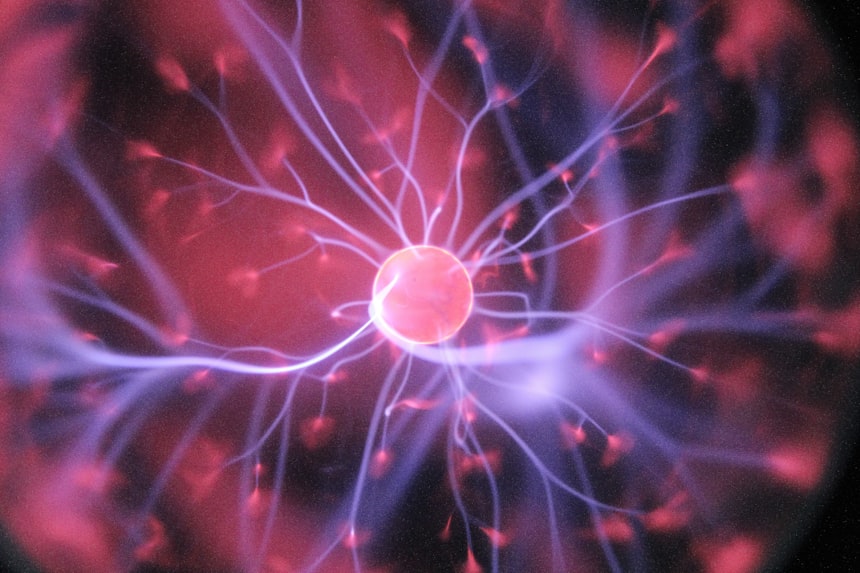
If the First Law is the accountant of the universe — making sure all the energy books balance — then the Second Law is the director. It doesn't just track energy; it tells you which direction things are allowed to go in.
The Second Law of Thermodynamics states: In any natural process, the total entropy of an isolated system never decreases. It either stays the same (for reversible processes) or increases (for irreversible ones).
Another way to state it: heat does not spontaneously flow from a cold object to a hot one. Your cold drink gets warm in a room; the room never spontaneously cools down to make your drink colder. That directionality — that arrow of time — is the Second Law.
Understanding Entropy
Entropy is the central concept of the Second Law, and it is arguably the deepest idea in all of science. It is commonly described as a measure of disorder or randomness, but a more precise way to understand it is this: entropy is a measure of how many different microscopic arrangements a system could be in while still appearing the same from the outside.
Think about it this way. A neatly stacked deck of playing cards has very low entropy — there is essentially only one arrangement that looks like a "sorted deck." If you throw the deck in the air and let the cards land randomly, the system now has vastly more possible arrangements (trillions upon trillions). That high number of possible states = high entropy.
Nature strongly prefers high-entropy states simply because there are so many more of them. It's not that the universe is "trying" to become disordered — it's just that disordered states are overwhelmingly more probable than ordered ones.
Three Ways to State the Second Law
Heat Flow Version
Heat never spontaneously flows from a colder body to a warmer one. To move heat "uphill" in temperature requires external work (which is exactly what your refrigerator does).
Engine Efficiency Version
No process is possible whose sole result is the complete conversion of heat into work. There will always be some energy that cannot be usefully extracted — it becomes waste heat.
Statistical Version
The entropy of a system is proportional to the logarithm of the number of possible microstates: S = k·ln(W). This connects thermodynamics to probability and molecular physics.
The Second Law in Everyday Life
The Second Law is everywhere. Here are situations you live through every day that it governs directly:
- Your coffee cools down because heat flows from the hot coffee to the cooler room — never the other way around.
- Your refrigerator keeps food cold by pumping heat from inside (cool) to outside (warm) using electrical work. Without that external energy input, the Second Law says it can't happen spontaneously.
- A dropped egg shatters but a shattered egg never spontaneously reassembles. The broken state has enormously more entropy.
- You age, and things wear out. Biological aging and mechanical wear are entropy increasing in biological and mechanical systems.
- Your room becomes messy "on its own" but never spontaneously tidies itself. High-entropy states (mess) vastly outnumber low-entropy ones (tidy room).
- Smoke from a chimney spreads out and never reconcentrates. Diffusion is entropy increasing.
The Refrigerator: A Step-by-Step Second Law Machine
Your refrigerator is one of the most elegant demonstrations of the Second Law in action. It is a machine specifically designed to move heat against its natural direction — and here's exactly how it does it:
Compression
The compressor (driven by electricity from the wall) compresses a refrigerant gas. Compression raises the gas's temperature significantly above room temperature.
Condensation (Heat Rejection)
The now-hot, high-pressure refrigerant flows through coils at the back of the fridge. Being hotter than room air, heat naturally flows from the refrigerant into the kitchen. The refrigerant cools and condenses to a liquid.
Expansion
The liquid refrigerant passes through an expansion valve. Pressure drops dramatically, and so does temperature — the refrigerant becomes very cold.
Evaporation (Heat Absorption)
The cold refrigerant flows through coils inside the fridge. Being colder than the food, it absorbs heat from your groceries. The food cools down; the refrigerant warms up and returns to the compressor — the cycle repeats.
Notice: the fridge uses electrical work to pump heat from cold (inside) to hot (room temperature outside). Left to itself, with no external energy, the food would warm up to match the kitchen. The Second Law is why your fridge needs to be plugged in.
The Third Law: Approaching the Edge of Cold
The Third Law of Thermodynamics concerns the extreme end of the temperature scale — absolute zero, the coldest temperature theoretically possible: −273.15°C, or 0 Kelvin.
The Third Law states: As the temperature of a perfect crystal approaches absolute zero, its entropy approaches zero.
This might sound like a curiosity reserved for exotic physics experiments, but the Third Law has profound consequences for both science and technology. It tells us that:
- Absolute zero is a limit, not a reachable state — it takes infinite work to actually cool something to exactly 0 K.
- Entropy has an absolute reference point, making it possible to calculate and tabulate absolute entropy values for all substances.
- At temperatures near absolute zero, materials can exhibit extraordinary quantum effects — including superconductivity and superfluidity.
Why Can't We Reach Absolute Zero?
Every cooling process works by removing heat from a substance. But as you get closer to absolute zero, there is less and less thermal energy left to remove, and it becomes exponentially harder to extract each remaining fraction of a joule. You can get extraordinarily close — modern laboratory techniques have cooled materials to within a billionth of a kelvin above absolute zero — but the Third Law guarantees you can never quite get there.
Real-World Applications of Near-Absolute-Zero Science
Superconductors
Certain materials cooled to near absolute zero conduct electricity with zero resistance. MRI machines and particle accelerators like the LHC rely on superconducting magnets cooled with liquid helium.
Cryogenic Preservation
Biological samples, including blood, sperm, and embryos, are preserved at extremely low temperatures. Reduced entropy means reduced molecular motion and deterioration.
Quantum Computing
Many quantum processors must operate at temperatures close to absolute zero to reduce thermal noise that would disrupt delicate quantum states (qubits).
Space Science
The James Webb Space Telescope's infrared detectors are cooled to about 7 K to prevent the telescope's own thermal radiation from swamping the faint light it's trying to detect.
Thermodynamic Cycles: How Engines Harvest Heat
A thermodynamic cycle is a sequence of processes that returns a system to its original state while converting energy from one form to another. Cycles are the theoretical backbone of all heat engines. Understanding them is the difference between a mechanic and an engineer.
The Carnot Cycle: The Theoretical Ideal
The Carnot cycle is a theoretical construct — no real engine can actually run one — but it defines the absolute upper limit on how efficient any heat engine can be. It was conceived by Sadi Carnot in 1824 and remains the benchmark against which all real engines are measured.
The Carnot efficiency is:
Where temperatures are in Kelvin. A higher hot-side temperature and a lower cold-side temperature both improve maximum possible efficiency. But crucially, unless T_cold = 0 K (impossible by the Third Law), efficiency is always less than 100%.
📊 Carnot Efficiency Example
A steam power plant operates with steam at 500°C (773 K) and rejects heat at 30°C (303 K). Maximum possible Carnot efficiency = 1 − 303/773 = 60.8%. Real plants achieve around 35–45%, losing efficiency to friction, heat losses, and irreversibilities. The gap between 60.8% and 42% represents the engineering challenge of a lifetime.
Real Thermodynamic Cycles Compared
| Cycle | Used In | Working Fluid | Typical Efficiency | Key Feature |
|---|---|---|---|---|
| Carnot | Theoretical benchmark | Any | Maximum possible | All processes reversible — impossible in practice |
| Rankine | Steam power plants, nuclear stations | Water/Steam | 33–47% | Uses phase change (boiling/condensing) to improve efficiency |
| Otto | Petrol / gasoline car engines | Air-fuel mixture | 25–35% | Constant-volume combustion; higher compression ratio → higher efficiency |
| Diesel | Diesel trucks, ships, generators | Air-fuel mixture | 35–45% | Constant-pressure combustion; inherently higher compression than Otto |
| Brayton | Jet engines, gas turbines | Air (open) or gas | 30–40% (simple); up to 60%+ (combined cycle) | Constant-pressure heat addition; extremely high power density |
| Stirling | Solar power, submarines, niche applications | Any gas | Up to 40%+ | Can theoretically approach Carnot efficiency; external combustion |
How a Rankine Cycle Works: Step by Step
The Rankine cycle powers most of the world's thermal electricity — from coal stations to nuclear plants to solar thermal installations. Here's how it works:
Pumping (Process 1→2)
Liquid water at low pressure is pumped to high pressure. This requires a small amount of work input but increases the water's potential to carry heat energy.
Boiling / Heat Addition (Process 2→3)
The high-pressure water passes through a boiler (heated by burning fuel, nuclear fission, or solar energy). It boils into high-pressure steam — absorbing enormous amounts of heat.
Expansion through Turbine (Process 3→4)
High-pressure steam expands through a turbine, spinning it at thousands of RPM. This rotation drives a generator to produce electricity. The steam loses pressure and temperature as it does work.
Condensation / Heat Rejection (Process 4→1)
The now-low-pressure steam enters a condenser (cooled by river water, seawater, or cooling towers). It condenses back to liquid water, rejecting waste heat to the environment — and the cycle begins again.
Thermodynamics in Nature: From Hurricanes to the Human Body

Thermodynamics is not confined to engineered systems. Nature is full of thermodynamic processes operating on scales from the molecular to the planetary.
Weather and Climate as Thermodynamic Systems
The Earth's atmosphere is, in thermodynamic terms, a heat engine. It receives high-quality thermal energy from the Sun (hot source), does work in the form of wind, rain, and ocean currents, and eventually radiates lower-quality heat back into the cold darkness of space (cold sink).
A hurricane is one of the most dramatic examples: it is powered by the temperature difference between warm tropical ocean water (its heat source) and the cold upper atmosphere (its heat sink). The greater this temperature difference, the more powerful the storm can theoretically become — a direct application of the Carnot efficiency equation to a natural system.
Photosynthesis: The Ultimate Thermodynamic Machine
Green plants perform what is, from a thermodynamic perspective, a remarkable trick. They take low-entropy sunlight (ordered, high-frequency photons) and convert it into the chemical potential energy of sugars — creating molecular order from incoming radiation. At the same time, they release water vapor and heat into the surroundings. The Second Law is obeyed because the total entropy of the system plus surroundings increases — but locally, in the leaf, entropy decreases and order is built. Life itself is a sustained, exquisitely organized battle against entropy, powered by an external energy source.
Human Metabolism
Your body is a thermodynamic machine operating at roughly 37°C. When you eat food, your cells break down its chemical bonds through a series of thermodynamically favorable reactions, extracting useful energy (in the form of ATP — adenosine triphosphate) and releasing heat. Your metabolic efficiency is roughly 25% for muscle contraction — meaning about 75% of the energy in food becomes body heat. This is why you get warm when you exercise, and why you need to eat to stay alive: you're running an engine that continuously loses heat to your surroundings.
Original Insight: Thermodynamics as the Science of Time's Arrow
The Second Law is the only fundamental law of physics that distinguishes between past and future. Newton's laws of motion, Maxwell's equations, quantum mechanics — all of them work just as well run backward in time. But the Second Law does not. Entropy increases in one direction only. This is why we remember the past but not the future, why broken eggs don't reassemble, and why time feels like it flows in one direction. Thermodynamics doesn't just describe how energy behaves — it explains why time itself has a direction.
Thermodynamics in Engineering: Where Theory Meets Steel
For engineers, thermodynamics is not abstract philosophy — it is the set of quantitative tools used to design, analyze, and optimize real machines. Every power plant, every refrigeration system, every turbine blade profile, every combustion chamber geometry is shaped by thermodynamic analysis.
Key Engineering Quantities and Their Formulas
Heat Transfer Rate
Q̇ = m·c·ΔT for sensible heat, where m is mass, c is specific heat capacity, and ΔT is temperature change. For phase changes: Q = m·L (latent heat). Engineers use this to size boilers, condensers, and heat exchangers.
Thermal Efficiency
η = W_net / Q_in. For any heat engine, this fraction of heat input that becomes useful work is always less than 1. The Carnot efficiency sets the theoretical maximum for given source and sink temperatures.
Coefficient of Performance
For refrigerators: COP = Q_cold / W_input. For heat pumps: COP = Q_hot / W_input. A well-designed refrigeration system might have a COP of 3–5, meaning for every joule of electricity used, 3–5 joules of heat are moved. This is not magic — it obeys the First Law completely.
Gibbs Free Energy
ΔG = ΔH − TΔS. If ΔG is negative, a reaction proceeds spontaneously. Chemical engineers use this to determine whether industrial processes will run on their own or need external energy input.
Pros and Cons of Different Power Generation Technologies (Thermodynamic Perspective)
✅ Nuclear Power (Rankine Cycle)
- High energy density per kilogram of fuel
- No combustion emissions
- Operates at stable base load
- Thermal efficiency improving with new reactor designs (up to 45%)
❌ Nuclear Power (Rankine Cycle)
- Still limited by Carnot — large amounts of waste heat
- Requires massive cooling systems (water usage)
- Radioactive waste management challenge
- High capital and construction costs
✅ Combined Cycle Gas Turbines
- Efficiencies exceeding 60% by combining Brayton + Rankine cycles
- Fast to start and shut down — flexible for grid balancing
- Lower carbon per kWh than coal
- Relatively compact and modular
❌ Combined Cycle Gas Turbines
- Still burns fossil fuel — CO₂ emissions
- Fuel cost exposure to gas price volatility
- Requires significant water cooling at the condenser stage
- Complex maintenance requirements
Beyond the Basics: Where Thermodynamics Gets Truly Fascinating
Statistical Mechanics: The Microscopic Foundation
Classical thermodynamics deals with bulk properties — temperature, pressure, volume — without caring about individual atoms. Statistical mechanics, developed primarily by Ludwig Boltzmann and James Clerk Maxwell in the latter half of the 19th century, provides the microscopic foundation for thermodynamics by connecting the behavior of individual particles to bulk thermodynamic properties.
Boltzmann's famous equation S = k·ln(W) — where k is Boltzmann's constant and W is the number of possible microstates — connects entropy (a macroscopic thermodynamic property) to probability and statistics at the atomic level. This was so revolutionary and so philosophically disturbing to some scientists of the time that Boltzmann faced fierce criticism for much of his career. He died in 1906; within a decade, experiments had proven him completely right.
Chemical Thermodynamics
Thermodynamics is the mathematical backbone of all chemistry. Every chemical reaction involves changes in energy and entropy. Chemists use thermodynamic tools to answer the most fundamental question in chemistry: will this reaction happen on its own?
The answer comes from Gibbs free energy: if ΔG < 0, the reaction is spontaneous. If ΔG > 0, it won't happen without external energy input. This predicts everything from whether a fuel will combust to whether a drug molecule will bind to a protein to whether a particular industrial synthesis is economically viable.
Thermodynamics at the Nanoscale
Classical thermodynamics was developed for systems containing vast numbers of particles — where statistical averages smooth out individual fluctuations. At the nanoscale — dealing with systems of tens or hundreds of molecules — those fluctuations become significant and can't be ignored. The emerging field of stochastic thermodynamics extends the classical laws to individual molecules, leading to results that seem to violate the Second Law on tiny scales (though they are consistent with it statistically). This has profound implications for understanding biological molecular machines — like the ATP synthase enzyme in your cells, which is essentially a nanoscale thermodynamic engine.
Thermodynamics and the Universe
Cosmological thermodynamics asks: what is the thermodynamic fate of the universe? The answer the Second Law suggests is called the heat death — a distant future state in which entropy has reached its maximum, all temperature gradients have leveled out, and no thermodynamic work can be extracted from anything. The universe would be in a state of maximum disorder, maximum entropy, and minimum useful energy. This is not expected to happen for timescales so vast they dwarf the current age of the universe many times over, but the Second Law, if it holds at cosmological scales, makes it inevitable.
A Student's Practical Guide: How to Think Through Thermodynamics Problems
Thermodynamics exams consistently trip students up not because the material is impossibly difficult, but because the conceptual framing is easy to get wrong. Here is a practical checklist developed from the most common mistakes:
Before You Write a Single Equation
- Define your system clearly. Draw a boundary around what you're studying. Everything inside is the system; everything outside is the surroundings.
- Identify the type of system. Is it open, closed, or isolated? This determines which energy terms matter.
- Identify the process. Is it isothermal (constant temperature), isobaric (constant pressure), isochoric (constant volume), or adiabatic (no heat exchange)?
- Write down what you know and what you need to find. Thermodynamics problems always involve finding the unknown from the known using the correct law.
- Check your units. Temperature must be in Kelvin for Carnot efficiency calculations. Pressure must be in Pascals for ideal gas law work. Errors here cause catastrophic results.
Common Misconceptions to Avoid
"Entropy always increases"
This only applies to the total entropy of the universe (isolated system). Local entropy can and does decrease — that's literally how life works. But it always requires entropy to increase somewhere else.
"100% efficiency is possible with good engineering"
No amount of engineering can overcome the Carnot limit. The Second Law prohibits 100% conversion of heat to work — full stop. This isn't an engineering problem; it's a law of nature.
"Absolute zero means no energy"
At absolute zero, classical thermal motion stops — but quantum mechanical zero-point energy remains. Particles still have energy at 0 K due to quantum effects; they just can't give it up.
"Heat and temperature are the same thing"
Heat (Q) is energy in transit. Temperature (T) is a property of a system. A large cold lake can contain more thermal energy than a small hot spark — but the spark has a higher temperature.
A Worked Example: Carnot Engine Problem
A heat engine operates between a furnace at 800°C and a cooling water system at 25°C. What is the maximum possible efficiency, and if the engine receives 50 kJ of heat per cycle, what is the maximum work output?
Convert temperatures to Kelvin
T_hot = 800 + 273 = 1073 K. T_cold = 25 + 273 = 298 K. Always convert to Kelvin for Carnot calculations.
Calculate Carnot efficiency
η = 1 − (T_cold / T_hot) = 1 − (298 / 1073) = 1 − 0.278 = 0.722. Maximum efficiency = 72.2%.
Find maximum work output
W_max = η × Q_in = 0.722 × 50 kJ = 36.1 kJ per cycle. The remaining 13.9 kJ must be rejected to the cold reservoir as waste heat.
Verify with First Law
Q_in = W + Q_rejected → 50 kJ = 36.1 kJ + Q_rejected → Q_rejected = 13.9 kJ. ✓ Energy is conserved.
Frequently Asked Questions About Thermodynamics
The Scientists Who Built Thermodynamics: A Who's Who
Sadi Carnot
French engineer. Published the founding text of thermodynamics in 1824. Introduced the concept of the ideal heat engine and the principle of maximum efficiency. Often called the "father of thermodynamics."
James Joule
British physicist. Experimentally established the mechanical equivalent of heat, proving that mechanical work can produce a precise, measurable amount of thermal energy. The SI unit of energy (joule) is named for him.
Rudolf Clausius
German physicist and mathematician. Formulated the First and Second Laws in their modern form. Coined the term "entropy" in 1865. His two famous statements — energy is constant; entropy tends to maximum — still define the field.
Lord Kelvin (William Thomson)
British physicist. Established the absolute temperature scale (Kelvin). Gave his own statement of the Second Law. Coined the word "thermodynamics." The Kelvin unit is named for him.
Josiah Willard Gibbs
American scientist. Developed chemical thermodynamics, free energy (Gibbs energy), and the phase rule. His work is the foundation of physical chemistry and chemical engineering as practiced today.
Ludwig Boltzmann
Austrian physicist. Developed statistical mechanics and showed that thermodynamic properties emerge from the statistical behavior of atoms. His entropy equation S = k·ln(W) is engraved on his tombstone in Vienna.
Where Thermodynamics Is Going: Modern Frontiers
Classical thermodynamics was largely complete by the early 20th century. But the field is far from finished. Here are the areas where thermodynamics is being actively pushed, extended, and applied in ways the founders couldn't have imagined.
Thermodynamics of Information
One of the most surprising 20th-century developments was the realization that information is thermodynamically real. Physicist Rolf Landauer showed in 1961 that erasing a single bit of information necessarily generates a minimum amount of heat — Landauer's limit. This connects computation directly to thermodynamics. The entropy of a system includes not just the randomness of molecular positions but also information content. This insight is shaping the thermodynamic analysis of computing, from understanding the fundamental energy limits of computers to the thermodynamics of biological information processing in DNA.
Black Hole Thermodynamics
In the 1970s, Stephen Hawking and Jacob Bekenstein showed that black holes obey laws strikingly analogous to the laws of thermodynamics. A black hole's surface area plays the role of entropy; its surface gravity plays the role of temperature. Hawking showed that black holes even radiate — "Hawking radiation" — implying they have a real temperature and therefore real thermodynamic properties. This discovery suggests a deep connection between thermodynamics, gravity, and quantum mechanics that physicists are still working to fully understand.
Non-Equilibrium Thermodynamics
Classical thermodynamics focuses on systems in or near equilibrium. But most interesting systems — living organisms, driven chemical reactions, Earth's climate — are far from equilibrium. Non-equilibrium thermodynamics studies how such systems maintain organized structure (often called "dissipative structures") by continuously consuming energy and generating entropy. The Nobel Prize in Chemistry was awarded to Ilya Prigogine in 1977 for his foundational work in this field. It has applications ranging from understanding the origin of life to designing more efficient industrial chemical processes.
Thermodynamics of Renewable Energy
The global transition to renewable energy is, at its core, a thermodynamic engineering challenge. Solar cells convert photon energy into electrical energy — bypassing heat engines and their Carnot limits. Wind turbines convert kinetic energy directly into electricity. Both have theoretical efficiency limits from thermodynamics (the Shockley-Queisser limit for solar cells; the Betz limit for wind turbines). Understanding and approaching these limits is one of the most active areas of energy engineering research today.
A Teacher's Toolkit: How to Make Thermodynamics Stick
Thermodynamics is infamous for being taught badly. The laws are often presented as abstract statements to be memorized, disconnected from anything students can see or feel. Here is a set of approaches that genuinely work for building real understanding:
Demonstration Ideas That Actually Illuminate the Laws
- First Law — Joule's Paddle Wheel (simplified): Stir a cup of water rapidly with a thermometer in it. The water temperature rises. Mechanical work (stirring) has become thermal energy. Energy changed form — none was created or destroyed.
- Second Law — Dye in Water: Place a drop of food coloring in a beaker of still water. Watch it diffuse spontaneously. Never stir it and ask students: will it reconcentrate? They know it won't. Ask why. That's entropy.
- Second Law — Heat Flow: Touch a metal spoon and a wooden spoon both sitting in boiling water. The metal feels hotter despite being at the same temperature. This demonstrates thermal conductivity — not the Second Law directly, but opens discussion of heat flow and what temperature really means.
- Carnot Efficiency — The Ice and Fire Demo: Show students the formula η = 1 − T_cold/T_hot and challenge them to calculate how efficient a theoretical engine operating between a block of ice (273 K) and a candle (about 1500 K) could possibly be. The answer (~82%) surprises most people and opens discussion about why real engines do so much worse.
- Entropy as Probability: Take a deck of cards. Shuffle it. Ask the class: how many different possible orders are there? (52! ≈ 8 × 10^67). How many of those orders look like a "sorted deck"? (Just one, or a handful). This concretely illustrates why systems move toward high-entropy states — not because of any mysterious force, but because disordered states are so overwhelmingly more probable.
Conceptual Questions Worth Discussing in Class
- If the First Law says energy is always conserved, why do we talk about an "energy crisis"?
- Why does your body temperature stay at 37°C even when the room is 20°C? What's doing the thermodynamic work?
- Is a living organism violating the Second Law? What is sustaining its low-entropy state?
- Why does friction always produce heat, and never the reverse — why don't warm surfaces spontaneously cause objects to slide?
- If you could build a perfect Carnot engine, would it produce any power? (Hint: think about the rate at which processes occur.)
Sources and Further Reading
The information in this article draws on established physics literature, peer-reviewed research, and reputable educational resources. If you want to go deeper, the following are among the best starting points:
- Cengel & Boles, Thermodynamics: An Engineering Approach — The standard undergraduate engineering thermodynamics text. Clear, comprehensive, full of worked examples.
- Atkins, Physical Chemistry — The canonical treatment of thermodynamics from a chemistry perspective. Rigorous and beautifully written.
- Feynman Lectures on Physics (Vol. 1, Chapters 39-46) — Feynman's uniquely insightful treatment of thermodynamics and statistical mechanics. Available free online at feynmanlectures.caltech.edu.
- Wikipedia — Laws of Thermodynamics, History of Thermodynamics — Well-maintained, extensively cited, good starting point for exploring further.
- Britannica — Thermodynamics — Expert-reviewed overview with historical context.
- OpenStax Physics — Free, peer-reviewed undergraduate physics textbook with solid thermodynamics coverage. Available at openstax.org.
- Prigogine, Order Out of Chaos — Accessible introduction to non-equilibrium thermodynamics and dissipative structures by the Nobel laureate himself.
The Big Picture: What Thermodynamics Tells Us About the Universe
Pull back from the equations for a moment and look at what thermodynamics, as a whole body of knowledge, actually says about the world.
It says that energy is the common currency of everything that happens — from a thought forming in your brain to a star exploding in a distant galaxy. It says that this currency is always conserved, always playing by the same rules, never created from nothing and never destroyed.
It says that the universe has a direction — a preferred "arrow of time" pointing from past to future — defined not by any force or particle, but by the statistical behavior of vast numbers of atoms moving toward more probable arrangements.
It says that everything that exists and persists in an organized form — a crystal, a cell, a civilization, a star system — exists by continuously consuming high-quality energy and generating entropy. Stop the energy flow, and organized structure dissolves back into the disorder that probability always favors.
And it says, with a kind of stark elegance, that there are limits. Limits on how much work you can extract from heat. Limits on how cold you can make something. Limits written into the structure of reality that no engineering ingenuity can overcome, because they are not engineering problems. They are the constitution of the physical world.
Thermodynamics doesn't just explain steam engines. It explains why anything changes, why everything ages, and what the universe is ultimately doing with itself. Not bad for a field that started with engineers arguing about steam.
Want More Science Like This?
Explore deeply researched, clearly explained science articles across physics, chemistry, biology, and beyond.
Explore our site labari.com.ng for more topics on science
Post a Comment