
Organic Chemistry | The Science Behind Everything You Touch, Eat and Breathe


Organic Chemistry
The fabric of your clothes, the medicine in your cabinet, the food on your plate, and even the DNA inside every cell of your body are all products of organic chemistry. It is easy to think of chemistry as something that only happens inside a laboratory, but organic chemistry is quite literally the chemistry of life itself, and its reach extends into nearly every material and product you interact with every single day.
This guide explains organic chemistry from the ground up. You will learn what makes a compound "organic," why carbon is so central to this entire field, how organic molecules are classified and named, the reactions that define the subject, and why this single branch of science underpins medicine, agriculture, plastics, fuel, and food.
What Is Organic Chemistry?
The Basic Definition
Organic chemistry is the branch of chemistry that studies compounds containing carbon, particularly those involving carbon-hydrogen bonds, along with their structure, properties, composition, reactions, and preparation.
This might seem like a narrow definition for an entire scientific field, but carbon's unique bonding behavior makes it capable of forming an almost unlimited variety of molecules. In fact, chemists have identified and characterized more organic compounds than all other known chemical compounds combined, which is why organic chemistry earned its own dedicated field of study rather than remaining a subcategory of general chemistry.
Why Carbon Is the Center of Organic Chemistry
Carbon has four electrons available for bonding, allowing it to form four stable covalent bonds with other atoms. This property, called tetravalency, means carbon can bond to other carbon atoms, hydrogen, oxygen, nitrogen, and many other elements, all at the same time, creating long chains, branched structures, and rings.
Think of carbon like a universal connector piece in a building set. While most other elements can only connect to a few pieces in limited ways, carbon can link to four different pieces simultaneously, and it can link to other carbon connectors indefinitely, forming chains of virtually any length. This is the structural reason why carbon-based molecules can become as simple as methane, with just one carbon atom, or as complex as a protein containing thousands of atoms.
Why Not All Carbon-Containing Compounds Are "Organic"
A common point of confusion is that a few carbon-containing compounds are actually classified as inorganic by convention, including carbon dioxide (CO₂), carbonates, and cyanides. This distinction exists mostly for historical reasons rather than strict chemical logic, dating back to when scientists believed organic compounds could only be produced by living organisms, a belief known as vitalism.
That belief was disproven in 1828 when German chemist Friedrich Wöhler synthesized urea, an organic compound found in urine, from inorganic starting materials in a laboratory, without any involvement of a living organism. This single experiment is widely regarded as the birth of modern organic chemistry, because it proved that organic molecules follow the same physical and chemical laws as everything else, and can be created artificially rather than requiring a mysterious "life force."
The Building Blocks: Hydrocarbons
What Are Hydrocarbons?
Hydrocarbons are the simplest organic compounds, made up of only carbon and hydrogen atoms. They form the structural backbone that more complex organic molecules are built upon, which is why understanding hydrocarbons first makes every other topic in organic chemistry easier to grasp.
Alkanes: The Simplest Hydrocarbons
Alkanes contain only single bonds between carbon atoms and are described as saturated, meaning every available carbon bond is filled with either another carbon or a hydrogen atom. Methane (CH₄), the simplest alkane, is the primary component of natural gas, while octane, an eight-carbon alkane, is a key component of gasoline.
Alkanes follow a predictable naming pattern based on chain length, using prefixes like meth- (one carbon), eth- (two carbons), prop- (three carbons), and but- (four carbons), followed by the suffix "-ane." This naming system, established by IUPAC, allows any chemist anywhere in the world to know the exact structure of a compound just from its name.
Alkenes and Alkynes: Unsaturated Hydrocarbons
Alkenes contain at least one carbon-carbon double bond, and alkynes contain at least one carbon-carbon triple bond. Both are described as unsaturated, because they contain fewer hydrogen atoms than an alkane with the same number of carbons would, leaving room for additional atoms to be added through chemical reactions.
This distinction matters enormously in practical applications. Ethylene (an alkene) is the starting material for polyethylene, the most widely produced plastic in the world, used in everything from shopping bags to milk jugs. The double bond in ethylene allows individual molecules to link together into extremely long chains during a process called polymerization, which is exactly how plastic is manufactured.
Aromatic Hydrocarbons
Aromatic hydrocarbons are built around a special ring structure, most famously represented by benzene, a six-carbon ring with alternating characteristics that make it unusually stable compared to what a simple alternating single and double bond pattern would suggest. This extra stability, called aromaticity, gives these compounds distinct chemical behavior and makes them the structural foundation for countless important molecules, including many pharmaceuticals, dyes, and industrial chemicals.
Functional Groups: The Key to Understanding Organic Reactions
What Is a Functional Group?
A functional group is a specific arrangement of atoms within a molecule that is responsible for that molecule's characteristic chemical behavior. This is arguably the single most important concept in all of organic chemistry, because it explains why chemists can predict how a molecule will react without needing to memorize the behavior of every individual compound.
Think of functional groups like the specific tool attached to the end of a long handle. The handle itself, usually a carbon chain, does not change much of the molecule's reactivity. It is the tool at the end, the functional group, that determines what the molecule can actually do chemically.
Common Functional Groups and Why They Matter
- Hydroxyl group (-OH): Defines alcohols. Ethanol, the alcohol found in beverages, owes its properties, including its ability to dissolve in water and its role in fermentation, directly to this functional group.
- Carboxyl group (-COOH): Defines carboxylic acids. Acetic acid, the compound responsible for vinegar's sour taste and acidity, contains this functional group, which is also why it can react as a weak acid in solution.
- Amino group (-NH₂): Defines amines, and is a critical component of amino acids, the building blocks of every protein in the human body.
- Carbonyl group (C=O): Found in aldehydes and ketones, this group is responsible for the reactivity seen in many biological molecules, including sugars, and gives certain compounds their distinctive smells and flavors.
- Ester group (-COO-): Formed from the reaction between a carboxylic acid and an alcohol, ester groups are responsible for many of the pleasant fruity smells found in nature, and they are also the key functional group in fats and biodiesel fuel.
Once a chemist identifies which functional groups are present in a molecule, they can predict, with a high degree of confidence, how that molecule will behave in a chemical reaction, even if they have never encountered that exact molecule before.
Types of Organic Reactions
Substitution Reactions
In a substitution reaction, one atom or group of atoms in a molecule is replaced by another. This is common in molecules called alkyl halides, where a halogen atom (like chlorine or bromine) can be swapped out for a different group, such as a hydroxyl group, transforming the compound into an alcohol.
Addition Reactions
Addition reactions occur when atoms are added across a double or triple bond, converting an unsaturated compound into a more saturated one. This is exactly the reaction used industrially to convert liquid vegetable oils into solid margarine, by adding hydrogen atoms across the double bonds present in the oil, a process called hydrogenation.
Elimination Reactions
Elimination reactions are essentially the reverse of addition reactions. Atoms are removed from a molecule, typically forming a double bond where there was previously a single bond. This type of reaction is important in the industrial production of alkenes from alkanes, which are then used as raw materials for plastics manufacturing.
Condensation and Hydrolysis Reactions
Condensation reactions join two molecules together while releasing a small molecule, usually water, as a byproduct. This is exactly how the human body builds proteins from amino acids and how it builds complex carbohydrates from simple sugars. Hydrolysis is the reverse process, using water to break a larger molecule back down into its smaller components, which is how digestion breaks down the food you eat into nutrients your body can absorb and use.
Real-World Applications of Organic Chemistry

Medicine and Pharmaceuticals
Nearly every prescription and over-the-counter medication is an organic compound, carefully designed so that its specific functional groups and molecular shape allow it to interact with a particular target in the human body, such as an enzyme or receptor. Aspirin, one of the most widely used medications in history, works because its structure allows it to block a specific enzyme involved in producing inflammation and pain signals.
Food and Nutrition
Carbohydrates, proteins, and fats, the three major nutrients in food, are all organic molecules built from smaller organic building blocks. Understanding organic chemistry is essential in food science for reasons ranging from why bread rises (a fermentation reaction producing carbon dioxide gas) to why oils go rancid over time (an oxidation reaction breaking down fat molecules).
Plastics and Materials Science
Virtually every plastic in existence is a polymer, a long chain built from repeating organic molecules called monomers linked together through addition or condensation reactions. The specific monomer used and the way the chains are arranged determines whether the final plastic is flexible like a plastic bag or rigid like a PVC pipe, which is why organic chemists play a central role in developing new packaging materials, textiles, and construction materials.
Fuels and Energy
Gasoline, diesel, natural gas, and even biofuels made from crops are all mixtures of organic hydrocarbon compounds. The energy released when these fuels burn comes from breaking and reforming the chemical bonds within these organic molecules, specifically converting carbon-hydrogen and carbon-carbon bonds into carbon dioxide and water while releasing energy in the process.
Agriculture
Fertilizers, pesticides, and herbicides are largely developed and refined through organic chemistry, with chemists designing molecules that target specific biological processes in pests or weeds while minimizing harm to crops, the surrounding environment, and the people who will eventually consume the food.
Case Study: How Aspirin Was Developed Through Organic Chemistry
Aspirin offers one of the clearest, most well-documented examples of organic chemistry improving a natural compound into a safer, more effective medicine.
For centuries, people chewed willow bark to relieve pain and fever, a remedy that worked because willow bark contains a compound called salicin, which the body converts into salicylic acid. While effective, salicylic acid on its own is harsh on the stomach lining, limiting its practical use as a regular medication.
In 1897, chemist Felix Hoffmann, working at Bayer, modified the structure of salicylic acid by adding an acetyl functional group to it, creating acetylsalicylic acid, the compound known today as aspirin. This small, deliberate structural change, adding a single functional group, significantly reduced the compound's harshness on the stomach while preserving its pain-relieving and anti-inflammatory properties.
This case study demonstrates one of the most powerful applications of organic chemistry: the ability to take a naturally occurring molecule, understand exactly which functional group is responsible for both its benefits and its drawbacks, and then make a precise, targeted modification to improve it. This same strategy, identifying a useful natural compound and then chemically refining it, remains a foundational approach in modern pharmaceutical drug development.
Common Mistakes and Misconceptions in Organic Chemistry
- "Organic chemistry means the same thing as 'organic food.' In chemistry, "organic" refers strictly to carbon-based compounds, regardless of whether they were produced naturally or synthetically. This is entirely different from the marketing term "organic food," which refers to food grown without synthetic pesticides or fertilizers, and has no direct connection to the scientific definition.
- Assuming molecular formula alone describes a compound. Two compounds can share the exact same molecular formula but have completely different structures and properties, a phenomenon called isomerism. For example, ethanol and dimethyl ether share the formula C₂H₆O, yet one is a liquid used in beverages and the other is a gas with entirely different chemical behavior, simply because their atoms are arranged differently.
- Believing synthetic organic compounds are inherently more dangerous than natural ones. Whether a compound is safe or harmful depends entirely on its specific chemical structure and how the body interacts with it, not on whether it was extracted from a plant or synthesized in a laboratory. Many naturally occurring organic compounds are highly toxic, while many synthetic organic compounds, including most modern medications, are specifically engineered to be safe and effective.
- Ignoring the importance of three-dimensional molecular shape. Two molecules with identical atoms and even identical bonds can behave completely differently in the body if their three-dimensional shape differs, a concept called stereochemistry. This is why some drug molecules must be manufactured as a single, specific spatial arrangement to work safely and effectively.
Organic Chemistry vs Inorganic Chemistry: What Is the Difference?
Organic and inorganic chemistry are the two broad branches that traditionally divide the entire field of chemistry, and understanding their difference clarifies exactly what falls under each.
- Organic chemistry focuses on carbon-based compounds, particularly those containing carbon-hydrogen bonds, and is closely tied to biology, medicine, and materials made from living or petroleum-based sources.
- Inorganic chemistry covers everything else, including metals, minerals, salts, and compounds that do not contain the carbon-hydrogen bonding characteristic of organic molecules, and is closely tied to fields like metallurgy, geology, and catalysis.
There is meaningful overlap between the two fields, particularly in a specialized area called organometallic chemistry, which studies compounds containing bonds between carbon and metal atoms, combining principles from both branches to develop industrial catalysts and specialized materials.
Frequently Asked Questions
Why is carbon uniquely suited to forming so many organic compounds? Carbon's four bonding electrons allow it to form four stable covalent bonds simultaneously, and its relatively small atomic size allows these bonds to be strong and stable. This combination lets carbon atoms link to each other in long chains, branches, and rings while still bonding to other elements like hydrogen, oxygen, and nitrogen, producing an almost unlimited variety of stable molecular structures.
What is the difference between saturated and unsaturated organic compounds? Saturated compounds contain only single bonds between carbon atoms, meaning every carbon is bonded to the maximum possible number of hydrogen atoms. Unsaturated compounds contain at least one double or triple bond, which reduces the number of hydrogen atoms present and creates additional reactive sites where other atoms can be added.
Do I need to memorize every organic reaction to understand the subject? No. Understanding functional groups is far more valuable than memorizing individual reactions, because functional groups predictably determine how a molecule will behave. Once you recognize which functional groups are present in a molecule, you can generally predict its reactivity by understanding the general behavior of that functional group category, rather than memorizing each specific compound individually.
Why do organic compounds often have complicated names? Organic compound names follow a systematic naming convention established by IUPAC, designed so that the name itself encodes the exact structure of the molecule, including its chain length, functional groups, and their positions. While this can seem complicated at first, it means any chemist in the world can read a compound's name and draw its exact structure without needing additional information.
Is organic chemistry only relevant to chemists? No. Organic chemistry underlies medicine, nutrition, agriculture, materials science, environmental science, and forensic science, among many other fields. Anyone working with pharmaceuticals, food production, plastics, fuels, or biological research will encounter organic chemistry concepts directly in their work.
What is the difference between organic chemistry and biochemistry? Organic chemistry studies the general principles governing carbon-based compounds and their reactions, while biochemistry applies those same organic chemistry principles specifically to the molecules and processes found within living organisms, such as enzymes, DNA, and metabolic pathways. Biochemistry can be thought of as a specialized, biology-focused application built directly on the foundation organic chemistry provides.
Conclusion
Organic chemistry is far more than a required course for chemistry and biology students. It is the science that explains why plastic bends the way it does, why medications relieve pain, why food digests the way it does, and why fuel releases the energy that powers vehicles and heats homes. At the center of it all is a single element, carbon, whose unique ability to form stable, versatile bonds makes the extraordinary diversity of organic molecules possible.
Understanding organic chemistry means understanding functional groups, recognizing the handful of core reaction types that explain countless specific transformations, and appreciating how small structural changes, like the single functional group modification that turned salicylic acid into aspirin, can have an enormous real-world impact. Once these fundamentals are in place, it becomes clear that organic chemistry is not a distant, abstract subject. It is the chemistry of the world you touch, eat, and breathe every single day.
Organic Chemistry: The Science Behind Everything You Touch, Eat, and Breathe
From the carbon in your DNA to the aspirin in your medicine cabinet — organic chemistry is the invisible engine of the modern world. Here's everything you need to understand it, use it, and maybe even fall in love with it.

A chemistry laboratory setup — where organic chemistry transforms theory into tangible reality. Photo: Unsplash
You've probably heard the word "organic" used to describe food — no pesticides, straight from the farm. But in chemistry, "organic" means something completely different, and far more profound. Organic chemistry is the study of carbon and its compounds. And that one element — carbon — is the reason life as we know it exists at all.
This isn't just a subject for university students grinding through problem sets at 2 AM. Organic chemistry explains why your phone screen doesn't shatter easily, how a vaccine gets made, why fats behave differently at different temperatures, and what makes your favourite perfume smell the way it does. It's everywhere — quietly running the show.
In this post, we're going deep. Whether you're a secondary school student meeting carbon for the first time, or a university student trying to make sense of reaction mechanisms, this is the page you bookmark and return to.
What Is Organic Chemistry, Really?
Let's start with the honest definition: organic chemistry is the branch of chemistry that studies the structure, properties, composition, reactions, and synthesis of carbon-containing compounds. The word "organic" once literally meant "from living organisms" — ancient chemists believed you could only get these compounds from life. That belief died in 1828 when a German chemist named Friedrich Wöhler accidentally made urea (a compound found in urine) from entirely non-living materials. That was a seismic moment.
Today, we know that organic compounds don't need to come from living things at all. They can be synthesized entirely in a lab. What unites them is carbon — always carbon.
💡 Why Carbon?
Carbon has four valence electrons, which means it can form four stable bonds — with other carbon atoms, with hydrogen, oxygen, nitrogen, and dozens more elements. This gives carbon an almost unlimited ability to build complex chain and ring structures. No other element comes close to this versatility. Silicon is sometimes floated as a candidate, but it just doesn't have carbon's range.
Organic vs Inorganic Chemistry: What's the Difference?
| Feature | Organic Chemistry | Inorganic Chemistry |
|---|---|---|
| Central element | Carbon (always) | Metals, non-metals (excluding carbon compounds) |
| Bond type | Mainly covalent bonds | Often ionic bonds |
| Examples | Glucose, ethanol, DNA, penicillin | Salt (NaCl), iron oxide, ammonia |
| Typical reactions | Slower, need catalysts or heat | Often fast, complete in seconds |
| Solubility | Often soluble in organic solvents | Often soluble in water |
| Flammability | Usually flammable (contain C–H bonds) | Usually non-flammable |
A Brief History of Organic Chemistry
Organic chemistry didn't appear from nowhere. It was built, brick by brick, through centuries of curiosity, accident, and genius. Here's the timeline that matters:
The Language of Organic Chemistry: Nomenclature
One of the first walls students hit with organic chemistry is naming. You see a compound called 2-methylbutan-1-ol and think: "What on earth?" But once you learn the system — specifically the IUPAC (International Union of Pure and Applied Chemistry) system — it's actually a logical, elegant language.
Think of naming an organic compound like naming a street address. There's a parent chain (the street), substituents (the house number), and functional groups (what type of building it is).
Step-by-Step: How to Name an Organic Compound (IUPAC)
-
1Find the longest carbon chain This is called the "parent chain." Count every carbon in the longest continuous chain — not branches. A 4-carbon chain = "but-", a 5-carbon chain = "pent-", and so on.
-
2Identify the principal functional group Functional groups determine the suffix of the name. An alcohol gets "-ol", a ketone gets "-one", a carboxylic acid gets "-oic acid", etc.
-
3Number the chain Number from the end closest to the principal functional group. The goal is to give that group the lowest possible number.
-
4Name the substituents Any branches off the main chain are substituents. A one-carbon branch is "methyl-", two-carbon = "ethyl-", three-carbon = "propyl-". List them alphabetically.
-
5Assemble the full name Combine: substituent locant + substituent name + parent chain + suffix. E.g., 2-methylpropan-1-ol = a 3-carbon chain with a methyl branch at position 2, and an OH group at position 1.
📝 Student Tip
Many students struggle with naming because they rush Step 1. Always count the carbon chain carefully before anything else. Drawing out the full structural formula — even if it takes an extra minute — saves you from cascading errors in every step that follows.
Common Parent Chain Prefixes
| Number of Carbons | Prefix | Example (alkane) |
|---|---|---|
| 1 | meth- | Methane (CH₄) |
| 2 | eth- | Ethane (C₂H₆) |
| 3 | prop- | Propane (C₃H₈) |
| 4 | but- | Butane (C₄H₁₀) |
| 5 | pent- | Pentane (C₅H₁₂) |
| 6 | hex- | Hexane (C₆H₁₄) |
| 7 | hept- | Heptane (C₇H₁₆) |
| 8 | oct- | Octane (C₈H₁₈) |
| 9 | non- | Nonane (C₉H₂₀) |
| 10 | dec- | Decane (C₁₀H₂₂) |
Hydrocarbons: The Core Building Blocks
Hydrocarbons are organic compounds made of only carbon and hydrogen. They're the simplest organic molecules, and also the most important starting point for understanding everything else. There are four main families:
1. Alkanes — The Saturated Hydrocarbons
Alkanes contain only single C–C bonds. They're "saturated" because each carbon atom is bonded to as many hydrogen atoms as possible. General formula: CₙH₂ₙ₊₂.
Alkanes are relatively unreactive — their C–C and C–H bonds are strong and non-polar. But they burn well (combustion), which is why methane powers your gas cooker and octane drives your petrol engine.
2. Alkenes — The Unsaturated (Double Bond) Hydrocarbons
Alkenes contain at least one carbon–carbon double bond (C=C). General formula: CₙH₂ₙ. That double bond makes alkenes significantly more reactive than alkanes — they readily undergo addition reactions.
Ethene (ethylene) is the most produced organic chemical in the world — used to make polyethylene plastic, ripening agents for fruits, and antifreeze.
3. Alkynes — Triple Bond Hydrocarbons
Alkynes have at least one carbon–carbon triple bond (C≡C). General formula: CₙH₂ₙ₋₂. The simplest alkyne is ethyne (acetylene), the gas burned in welding torches to cut through metal at over 3,000°C.
4. Aromatic Hydrocarbons (Arenes)
Aromatic hydrocarbons are built around benzene rings — a six-carbon ring with alternating double bonds (though in reality the electrons are delocalized, not alternating). Benzene itself (C₆H₆) is the cornerstone of aromatic chemistry.
Aromatic compounds are incredibly stable due to this electron delocalization. They include toluene (found in paint thinner), naphthalene (mothballs), and the polycyclic aromatic hydrocarbons found in coal tar. Many pharmaceuticals are built around benzene rings.
Functional Groups: The Personality of a Molecule
Here's a useful way to think about functional groups: if the carbon skeleton is a molecule's body, the functional group is its personality. It determines how the molecule behaves, what reactions it undergoes, and what properties it has.
There are dozens of functional groups in organic chemistry. These are the ones every student must know:
Major Types of Organic Reactions
Organic chemistry is ultimately the study of how molecules change. Reactions are at the heart of it all. There are several broad categories, and understanding which category a reaction falls into is often the key to predicting what products will form.
1. Addition Reactions
In an addition reaction, two molecules combine to form a single product. Nothing is lost — everything gets added on. These are most common in alkenes and alkynes, where the double or triple bond "opens up" to accept new atoms.
2. Substitution Reactions
One atom or group is replaced by another. The molecule doesn't fundamentally change shape — just swaps one part for another. These are most common in alkanes and aromatic compounds.
3. Elimination Reactions
The reverse of addition — atoms are removed from adjacent carbons to form a double bond. The most common type is dehydration (removal of water) or dehydrohalogenation (removal of HX).
4. Condensation Reactions
Two molecules react and join together, releasing a small molecule — usually water — in the process. Esterification (making esters from acid + alcohol) is a classic example. So is peptide bond formation in proteins.
5. Oxidation and Reduction Reactions
In organic chemistry, oxidation usually means adding oxygen or removing hydrogen. Reduction is the opposite. These reactions are critical in biology — your cells run on oxidation reactions that break down glucose.
6. Polymerization
Monomers — small, repeating molecules — chain together to form giant polymers. Addition polymerization (alkenes joining end to end) and condensation polymerization (losing small molecules at each join) are the two main types. Polyethylene, PVC, nylon, and proteins are all polymers.
Isomerism: Same Formula, Different Structure
One of the most interesting concepts in organic chemistry is isomerism — the fact that two compounds can have the same molecular formula but completely different structures, and therefore completely different properties.
Structural Isomers
These have the same formula but different connectivity. Butane (C₄H₁₀), for example, exists as either a straight chain (n-butane) or a branched chain (isobutane / 2-methylpropane). Same atoms, different arrangement.
Stereoisomers
Same connectivity, different spatial arrangement. There are two types:
Geometric isomers (cis/trans or E/Z): Occur in molecules with a double bond or ring, where rotation is restricted. Cis-2-butene has both methyl groups on the same side; trans-2-butene has them on opposite sides. They have different boiling points, melting points, and chemical behaviour.
Optical isomers (enantiomers): Mirror images that cannot be superimposed — like left and right hands. These matter enormously in pharmacology. The drug thalidomide, given to pregnant women in the 1950s for morning sickness, had two enantiomers. One relieved nausea. The other caused severe birth defects. That tragedy transformed how drugs are developed and tested.
Organic Chemistry in Real Life: Where It Actually Shows Up
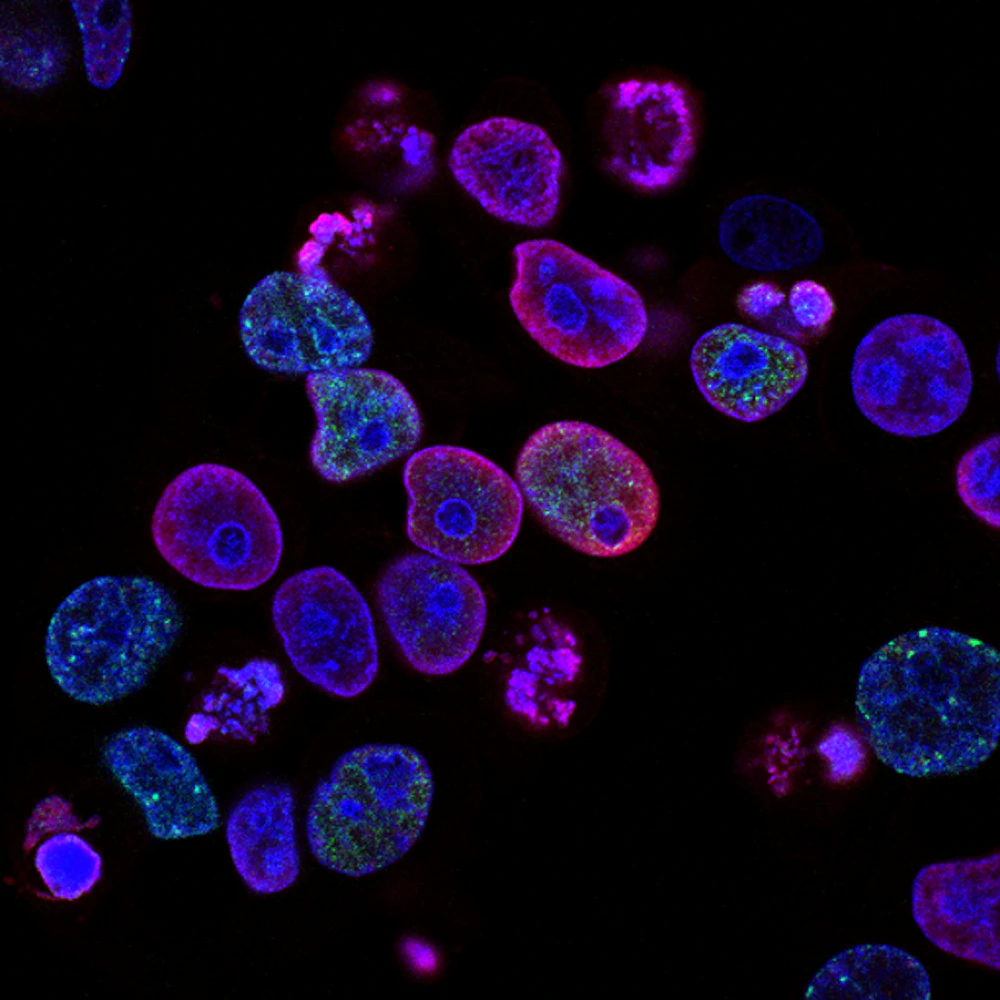
Nearly 90% of pharmaceutical drugs are organic compounds. Photo: Unsplash
This is where things get exciting. Organic chemistry isn't confined to laboratories or university classrooms. It is the foundation of nearly every material and industry that runs modern life.
Pharmaceuticals and Medicine
According to the World Health Organization, roughly 90% of available drugs are organic compounds. Aspirin (acetylsalicylic acid), penicillin, paracetamol, ibuprofen, insulin, mRNA vaccines — all products of organic chemistry. Drug development is fundamentally about designing molecules that interact with specific biological targets in the body.
When chemists develop a new drug, they don't just mix things together. They engineer the molecule — choosing the right functional groups, the right shape, the right degree of lipophilicity (fat-solubility) to help it cross cell membranes. It's molecular architecture.
Food and Agriculture
Everything you eat is organic chemistry in action. Carbohydrates, proteins, fats, vitamins, enzymes — all organic molecules. Cooking is chemistry. The Maillard reaction (the browning of bread and meat) is an organic reaction between amino acids and sugars. Fermentation — beer, wine, yogurt — is driven by organic reactions catalyzed by enzymes.
In agriculture, organic chemistry produces pesticides, herbicides, and synthetic fertilizers. The Haber-Bosch process for ammonia (which feeds a significant fraction of the world's population) is arguably organic chemistry's greatest applied triumph.
Plastics and Polymers
Almost every plastic object you own — your phone case, water bottle, car dashboard, shopping bag — is a polymer made from organic chemistry. Polyethylene, polypropylene, PVC, nylon, polyester: these are all organic polymers, each with properties tuned by chemists for specific applications.
The development of nylon in 1938 by Wallace Carothers at DuPont was a turning point. It launched a revolution in synthetic materials that continued through the 20th century and shows no signs of slowing.
Fuels and Energy
Petroleum is a complex mixture of hydrocarbons. Refining it — separating, cracking, and reforming those hydrocarbons — is organic chemistry at industrial scale. Petrol, diesel, kerosene, LPG: all organic compounds. Even the push for renewable energy relies on organic chemistry — organic photovoltaics, biofuels, and battery electrolytes are all active research areas.
Cosmetics and Fragrances
The fragrance in your perfume is a carefully designed mixture of volatile organic compounds. Esters, terpenes, aldehydes, and musks are blended by perfumers to create specific olfactory experiences. Skin creams are emulsions of organic compounds — moisturizers, emollients, preservatives. Sunscreen works because certain organic molecules absorb UV radiation.
Materials Science and Technology
Organic light-emitting diodes (OLEDs) — the technology in your phone screen — depend on organic chemistry. Carbon fiber composites, used in aircraft and sports cars, are organic. Kevlar, used in bulletproof vests, is an aromatic polyamide. Organic semiconductors are increasingly important in flexible electronics and solar panels.
Pros and Cons of Studying Organic Chemistry
Let's be real about what you're signing up for.
- Extremely wide career applications — pharma, food science, materials, energy, research
- Strong logical structure — mechanisms follow predictable patterns once you learn the rules
- Deeply connected to biology — makes biochemistry and medicine make sense
- Highly respected qualification — organic chemists are in demand globally
- Intellectually satisfying — solving a synthesis problem feels like solving a puzzle
- Cutting-edge relevance — climate solutions, drug discovery, and nanotech all need it
- Memorisation burden — hundreds of reactions, mechanisms, and reagents to learn
- Abstract concepts — 3D molecular geometry is genuinely difficult to visualise
- High exam failure rates at university level in many countries
- Time-intensive — lab work and problem sets can consume significant hours weekly
- Easy to fall behind — concepts build on each other rapidly
- Reagent names are confusing — LiAlH₄, NaBH₄, PCC, DIBAL... the acronyms multiply
Biochemistry: Where Organic Chemistry Meets Life
Biochemistry is essentially organic chemistry operating inside living cells. The molecules of life — carbohydrates, lipids, proteins, and nucleic acids — are all organic compounds. Understanding organic chemistry gives you the tools to understand how life works at the molecular level.
Carbohydrates
Carbohydrates are molecules of carbon, hydrogen, and oxygen (general formula: Cₙ(H₂O)ₙ). Simple sugars (monosaccharides) like glucose and fructose are small organic molecules. They link together in condensation reactions to form disaccharides (sucrose = glucose + fructose) and polysaccharides (starch, glycogen, cellulose).
Glucose is your body's primary fuel. Every cell in your body runs on ATP generated by oxidising glucose through glycolysis, the citric acid cycle, and oxidative phosphorylation — all organic chemistry, all happening inside your mitochondria right now.
Lipids (Fats and Oils)
Lipids are esters — formed from glycerol and fatty acids. Saturated fats (no double bonds in the fatty acid chain) are solid at room temperature (think butter). Unsaturated fats (one or more double bonds) are liquid (think olive oil). The double bonds create kinks in the chain that prevent close packing.
Cell membranes are made of phospholipids — a special type of lipid with a hydrophilic (water-loving) head and two hydrophobic (water-fearing) fatty acid tails. This amphipathic structure is why cell membranes form spontaneously in water, creating a bilayer that separates the inside of the cell from the outside.
Proteins
Proteins are long chains of amino acids linked by peptide bonds (amide bonds). The sequence of amino acids (the primary structure) is encoded by DNA. The chain folds into secondary structures (alpha helices and beta sheets), then into a three-dimensional tertiary structure. This shape determines the protein's function. Enzymes, antibodies, hormones, transport proteins — all proteins, all organic chemistry.
Nucleic Acids (DNA and RNA)
DNA is a double helix of nucleotides — each nucleotide containing a sugar (deoxyribose), a phosphate group, and one of four nitrogenous bases (adenine, thymine, guanine, cytosine). The bases pair across the helix: A with T, G with C. This pairing — and the ability to copy it — is the molecular basis of heredity. It's all organic chemistry.
How to Actually Study Organic Chemistry (A Practical Guide)

Effective organic chemistry study requires active engagement — not passive reading. Photo: Unsplash
Let's talk honestly about studying organic chemistry, because "read your notes" is not a strategy. Here's what actually works:
-
1Don't memorise reactions blindly — understand the mechanism Every reaction has a reason. Nucleophiles attack electrophiles. Electrons flow from areas of high density to low density. Once you understand why a reaction works, you can often predict what you've never seen before. Focus on arrow-pushing in mechanisms — it's the language of organic chemistry.
-
2Draw, draw, draw Organic chemistry is visual. Draw every structure by hand. Draw the mechanisms slowly. Use 3D notation (wedge-dash) when stereochemistry matters. Students who draw everything perform significantly better than those who read passively.
-
3Use molecular models Buy a cheap molecular model kit. Hold the tetrahedral carbon in your hands. Rotate it. See how chirality works physically. For many students, 3D understanding only clicks once they can physically manipulate the molecule.
-
4Group reactions by functional group Don't study every reaction randomly. Group them: "these are all reactions that alcohols undergo." "These are all ways to make alcohols." This creates a mental map that connects concepts.
-
5Do problems — hundreds of them Reading about organic chemistry is not the same as doing it. Work through naming problems, mechanism problems, and synthesis problems. Work backward from products. Struggle with hard problems, then check the solution step by step.
-
6Use spaced repetition for reactions and reagents Flashcard apps like Anki are genuinely useful for organic chemistry. Create cards for functional group names, reagent actions, and reaction types. Review them daily in short bursts rather than cramming.
-
7Relate everything back to real life When you study esters, think of perfumes and fats. When you study fermentation, think of bread and beer. When you study alkenes, think of polyethylene plastic. Real-world anchors make abstract concepts stick.
✅ Exam Readiness Checklist
- I can name any simple organic compound using IUPAC rules
- I know the structural formula and properties of each major functional group
- I can draw and explain the mechanism for addition, substitution, and elimination reactions
- I can distinguish between structural isomers and stereoisomers
- I understand how alkanes, alkenes, alkynes, and benzene differ in reactivity
- I can predict the products of common organic reactions given reagents and conditions
- I can explain what esterification, polymerization, and oxidation mean in practical terms
- I can connect organic chemistry concepts to biochemistry (proteins, fats, carbs, DNA)
Green Chemistry: The Future of Organic Chemistry
Organic chemistry has a complicated relationship with the environment. It gave us plastics — which are now polluting every ocean. It gave us pesticides — some of which decimated bird populations. But organic chemistry is also the discipline developing solutions to the problems it helped create.
Green chemistry is a movement within organic chemistry that aims to design chemical processes that reduce or eliminate hazardous substances, minimise waste, and use renewable resources. Its twelve principles include using atom-efficient reactions (where every atom of reactant ends up in the product), avoiding toxic solvents, and designing molecules that break down safely after use.
Biodegradable plastics — made from plant-based monomers like lactic acid — are a product of green chemistry thinking. So are catalytic reactions that replace stoichiometric amounts of toxic reagents. The synthesis of ibuprofen was redesigned using green chemistry principles, reducing the number of steps from six to three and dramatically cutting waste.
The Nobel Prize in Chemistry 2021 was awarded for asymmetric organocatalysis — using small organic molecules as catalysts instead of metals, reducing the environmental and economic costs of pharmaceutical synthesis. It's a perfect example of organic chemistry solving organic chemistry's own problems.
Careers in Organic Chemistry
A deep understanding of organic chemistry opens doors across an enormous range of industries. Here are some of the most significant:
Frequently Asked Questions
Curious about more science topics like this?
From chemistry to biology, physics to earth sciences — we break down complex ideas so they actually make sense.
Explore Labari.com.ng
Post a Comment