
Ecology | How Life on Earth Really Works

Ecology:
How
Life on Earth Really Works
From rainforests and coral reefs to population crashes and climate tipping points — this is the most complete, human-written guide to ecology anywhere on the internet. Every level, every branch, every crisis, and every career path. No padding. Just real science, explained clearly.
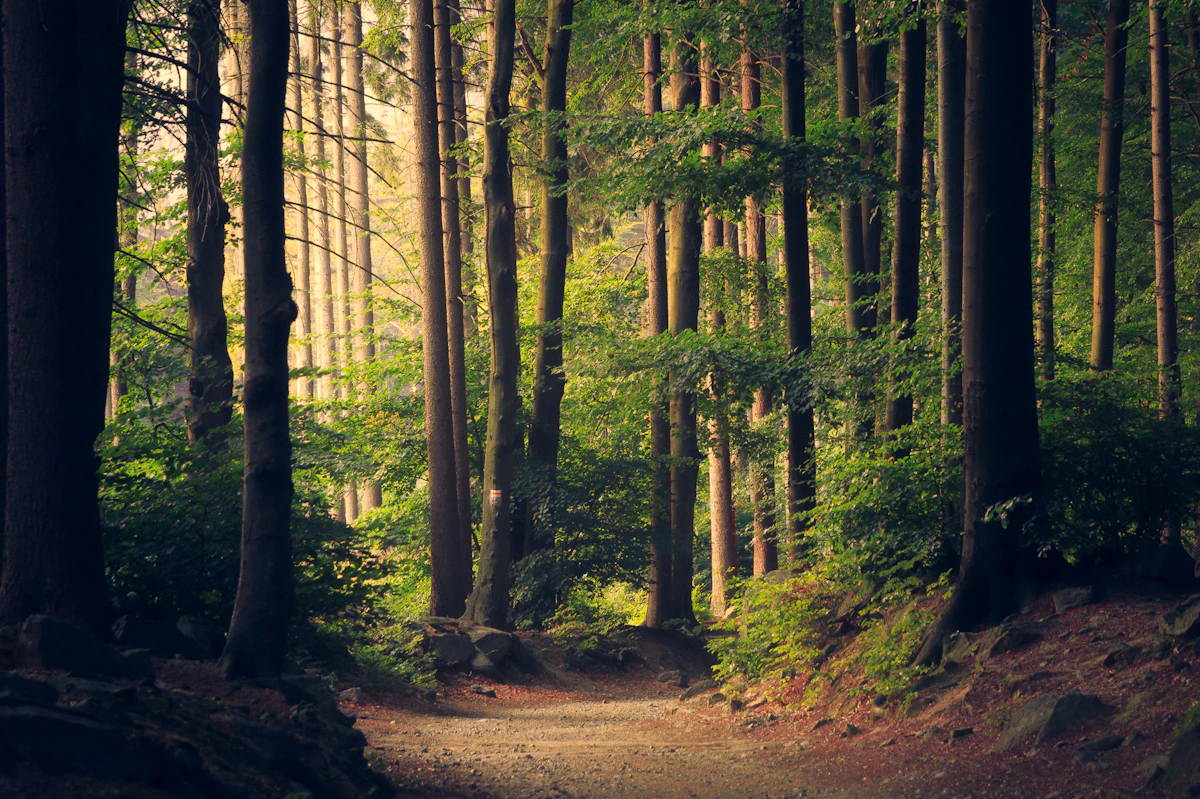
A forest ecosystem in full operation: photosynthesis, nutrient cycling, food webs, and thousands of interdependent species. (Unsplash / Free to use)
What Is Ecology? The Science That Explains Why Everything Is Connected
Step outside. Look at a tree. Now think past the tree — the fungi wrapping its roots, the bacteria fixing nitrogen in the soil beneath it, the caterpillar consuming its leaf, the bird consuming the caterpillar, the hawk watching the bird, the river whose chemistry feeds the soil, the atmosphere the tree breathes and shapes. Every one of those relationships has a name, a mechanism, and a body of research behind it.
That is ecology: the scientific study of the relationships between living organisms and their physical environment, and between living organisms themselves. The word comes from the Greek oikos (household) and logos (study) — coined in 1866 by German biologist Ernst Haeckel, who understood that living things do not exist in isolation. They live in households. They share resources, compete, cooperate, eat, are eaten, reproduce, migrate, and die — and all of that shapes the world.
Ecology is not environmentalism, though they are related. Environmentalism is a political and ethical movement. Ecology is a rigorous natural science — as mathematically demanding as physics, as experimentally careful as chemistry, and arguably as important as both. Every decision humanity makes about land use, fisheries, agriculture, disease control, urban planning, and climate policy should be — and increasingly is — grounded in ecological science.
This guide covers the full scope: what ecology studies and why, all its major branches, the levels of ecological organization, the key scientists who built the field, the real-world crises ecology is racing to address, its career paths, and the frontier questions still being debated. Whether you are a student encountering ecology for the first time or a researcher needing a structured reference, this is your pillar resource.
The Six Levels of Ecological Organization: From Organism to Biosphere
Ecology operates across a hierarchy of scales, each one building on the one below it. Understanding this hierarchy is essential because ecological patterns and processes look completely different depending on which level you study. A disease outbreak looks one way at the organism level and completely different at the population or community level. Here are the six levels:
Level 1: The Organism
The organism level asks: how does an individual survive and reproduce in its specific environment? This includes physiological adaptations (a camel storing fat in its hump to metabolize water), behavioral adaptations (a wolf hunting in coordinated packs), and morphological adaptations (the pale fur of an Arctic fox reducing heat loss). Organismal ecology overlaps heavily with physiology and evolutionary biology.
A vivid example: the pitcher plant Nepenthes rajah in Borneo evolved to catch and digest insects and even small vertebrates — but recent research shows it also harvests nutrients from bat droppings, offering the bats a safe roosting spot in exchange. One organism, one adaptation, two species benefiting. Ecology starts at this intimate scale.
Level 2: The Population
A population is all individuals of one species living in the same area at the same time. Population ecology studies how population size changes over time — birth rates, death rates, immigration, emigration. It gives us tools to predict whether a species will grow, stabilize, or collapse.
dN/dt = rN[(K − N)/K] (Logistic growth model)
Real example: when grey wolves were reintroduced to Yellowstone in 1995, ecologists used population models to predict how the wolf population would grow, what density it would reach, and how it would interact with elk — predictions that proved remarkably accurate over the following two decades.
Level 3: The Community
A community is all the populations of different species living and interacting in the same area. Community ecology studies species interactions — predation, competition, mutualism, parasitism, commensalism — and how those interactions shape the structure of the community. Who eats whom? Who competes for the same resource? Whose presence enables the survival of others?
🔥 The Trophic Cascade: Wolves Change Rivers
One of ecology's most stunning demonstrations: when wolves were extirpated from Yellowstone by the 1920s, elk populations exploded and overgrazed riverbanks. Without vegetation, riverbanks eroded, streams widened and destabilized. When wolves were reintroduced in 1995, elk behavior changed — they avoided valleys and riverbanks. Vegetation recovered. Riverbanks stabilized. Beavers returned, building dams that created wetland habitats for otters, muskrats, ducks, and fish. The rivers literally changed course.
This trophic cascade — a top predator's effects rippling down through the food web to affect even the physical landscape — is now one of the most cited examples in ecology. It demonstrates that community structure is not just about who is present; it is about how each species changes the behavior and distribution of every other.
Level 4: The Ecosystem
An ecosystem is a community of organisms plus the non-living (abiotic) components of their environment: sunlight, temperature, water, soil chemistry, wind. Ecosystem ecology studies how energy flows and nutrients cycle through this integrated system. The key insight: the same atoms — carbon, nitrogen, phosphorus — cycle endlessly between living organisms and the physical environment. Life is not separate from the planet; it is the planet processing itself.
Level 5: The Biome
A biome is a large-scale regional community characterized by climate and its dominant vegetation and animal types. The tropical rainforest is a biome. So is the Arctic tundra, the Sahara desert, the temperate grassland. Biomes are defined by temperature and precipitation patterns — which is why a tropical rainforest in Brazil and one in Indonesia look remarkably similar in structure despite being 10,000 km apart, with entirely different species.
Level 6: The Biosphere
The biosphere is all life on Earth, plus all the environments it inhabits — from the deepest ocean trenches to the upper atmosphere. It is the grandest scale of ecology. Understanding the biosphere means understanding how the sum of all ecosystems regulates the planet's atmosphere (oxygen, carbon dioxide, methane), global climate, water cycle, and nutrient cycles. The biosphere is not just where life lives. It is what makes Earth habitable.
All Major Branches of Ecology — What Each One Studies
Ecology has expanded enormously since Haeckel's original definition. Today it branches into over a dozen distinct subdisciplines, each with its own methods, questions, and journals. Here are the most important:
Behavioral Ecology
Studies how behavior evolves in response to ecological pressures. Why do meerkats post sentinels? How do migratory birds navigate? Behavior as an ecological adaptation.
Population Ecology
Models population dynamics: birth rates, death rates, age structure, carrying capacity. Foundation of fishery management, conservation quotas, and invasive species control.
Community Ecology
Studies species interactions — predation, competition, mutualism, succession. Asks: what determines which species coexist, and in what abundances?
Ecosystem Ecology
Focuses on energy flow and nutrient cycling through entire systems. Measures gross primary production, decomposition rates, and biogeochemical fluxes.
Landscape Ecology
Studies how spatial patterns across landscapes — habitat patches, corridors, fragmentation — affect ecological processes. Critical for conservation planning.
Global / Macroecology
Examines large-scale patterns in biodiversity, species distributions, and ecological processes across continents and ocean basins. Uses big data and remote sensing.
Evolutionary Ecology
Explores how ecological interactions drive evolution and how evolutionary history shapes ecology. Coevolution, arms races, and life history theory live here.
Microbial Ecology
Studies the ecology of bacteria, archaea, fungi, and viruses in soil, water, and host organisms. The hidden majority — microbial biomass exceeds all plant and animal biomass combined.
Urban Ecology
Examines how cities function as ecosystems — species that thrive in human environments, heat island effects, and how green infrastructure can support biodiversity.
Marine Ecology
Studies ocean ecosystems from intertidal zones to abyssal plains — food webs, coral reef dynamics, ocean acidification, and deep-sea vent communities.
Conservation Ecology
Applies ecological science to protect species and habitats. Designs protected area networks, manages population viability, and guides habitat restoration.
Restoration Ecology
Studies how to rebuild degraded ecosystems — rewilding projects, wetland restoration, reef seeding. A rapidly growing applied field responding to the biodiversity crisis.
The Core Concepts of Ecology — Explained Clearly
4.1 — Food Webs and Trophic Levels
Energy enters almost every ecosystem through photosynthesis: plants and algae (producers) convert sunlight into chemical energy. That energy moves up the food web as organisms consume each other. The trophic level of an organism describes its feeding position:
| Trophic Level | Name | Examples | Energy Transfer |
|---|---|---|---|
| Level 1 | Producers (Autotrophs) | Grasses, trees, algae, phytoplankton | Convert ~1-2% of solar energy into biomass |
| Level 2 | Primary Consumers | Rabbits, deer, caterpillars, zooplankton | ~10% efficiency from Level 1 |
| Level 3 | Secondary Consumers | Frogs, small fish, foxes | ~10% efficiency from Level 2 |
| Level 4 | Tertiary Consumers | Wolves, sharks, eagles, large tuna | ~10% efficiency from Level 3 |
| Any level | Decomposers / Detritivores | Fungi, bacteria, earthworms, vultures | Break down dead organic matter; recycle nutrients |
The critical rule: only about 10% of energy passes from one trophic level to the next. The rest is lost as heat, used for respiration, or excreted. This is why food chains rarely exceed four or five levels — there simply is not enough energy left at higher levels to sustain more. It also explains why a vegetarian diet has a dramatically smaller ecological footprint than a meat-based diet: you are eating at a lower trophic level, requiring far less land and water.

River deltas are among Earth's most productive and biodiverse ecosystems — bridging marine, freshwater, and terrestrial food webs. (Unsplash / Free to use)
4.2 — Nutrient Cycles: The Circulation of Life
Unlike energy (which flows in one direction and is eventually lost as heat), nutrients cycle. The same carbon atom in your body today may have been part of a dinosaur's bone 70 million years ago, part of a Cretaceous ocean 200 million years ago, and part of the atmosphere between times. Three cycles are especially critical:
♻ The Three Master Cycles
Carbon Cycle: CO₂ is fixed by photosynthesis into organic matter, consumed through food webs, released by respiration, decomposition, and combustion. The ocean absorbs ~25% of human CO₂ emissions annually. Forests store ~860 GtC globally in biomass. Human fossil fuel combustion has increased atmospheric CO₂ from 280 ppm pre-industrial to over 420 ppm today.
Nitrogen Cycle: Atmospheric N₂ is fixed by bacteria (including Rhizobium in legume root nodules) into ammonium, then nitrified to nitrate that plants absorb. Decomposers release nitrogen back. Human agriculture has roughly doubled the rate of nitrogen entering terrestrial ecosystems, causing eutrophication in waterways and dead zones in coastal seas.
Phosphorus Cycle: Unlike carbon and nitrogen, phosphorus has no gaseous phase — it cycles only through rock weathering, soil, organisms, and sediment. It is often the limiting nutrient in aquatic ecosystems. Phosphorus from fertilizer runoff drives the eutrophication that creates algal blooms, oxygen depletion, and fish kills in lakes and rivers worldwide.
4.3 — Biodiversity: The Measure of Ecological Wealth
Biodiversity is not just a count of species. It has three distinct dimensions:
- Genetic diversity: Variation within a species — the raw material of evolution and the buffer against disease. The Irish Potato Famine (1845–1849) killed one million people partly because Irish potato crops had near-zero genetic diversity; one pathogen wiped out the entire crop.
- Species diversity: The number of species (richness) and their relative abundances (evenness) in an area. A forest with 100 species of similar abundance is more diverse than one with 100 species where one dominates 90% of individuals.
- Ecosystem diversity: The variety of ecosystems within a region — grasslands, forests, wetlands, coral reefs. Each type provides different ecological functions and species assemblages.
Why does biodiversity matter ecologically? Research consistently shows that more diverse ecosystems are more productive, more stable under stress, more resistant to invasion, and more resilient after disturbance. A forest with 40 tree species will regrow faster after a hurricane than a monoculture plantation. A coral reef with 500 fish species will survive bleaching events better than one with 50.
4.4 — Ecological Succession
Succession is the process by which ecological communities change over time in a predictable direction. After a volcanic eruption covers land with bare rock (primary succession), pioneer species like lichen and mosses colonize first, breaking down rock into soil. Grasses follow, then shrubs, then trees — over decades to centuries, a climax community (often forest) establishes.
Secondary succession occurs when a community is disturbed but soil remains — after a forest fire, agricultural abandonment, or flooding. This is faster than primary succession because soil and seed banks persist. Understanding succession is essential for restoration ecology: you cannot plant a climax forest on bare substrate and expect it to thrive; you must guide the system through its successional stages.
4.5 — Keystone Species and Ecological Engineers
A keystone species is one whose impact on its community is disproportionately large relative to its abundance. Remove a keystone species and the community collapses or transforms. The concept was developed by Robert Paine in 1969 through his famous experiment: removing sea stars (Pisaster ochraceus) from a Pacific intertidal community caused mussels to take over and eliminate 15 other species. One species, massive impact.
Other keystones: elephants (maintaining savanna by knocking down trees that would otherwise become forest), fig trees (providing year-round fruit in tropical forests when nothing else fruits), sea otters (controlling sea urchin populations that would otherwise destroy kelp forests).
Ecosystem engineers physically modify habitats: beavers build dams that create wetlands; earthworms aerate and fertilize soil; oysters filter water and build reef structures. Their engineering changes the physical environment in ways that enable dozens of other species.
4.6 — Ecological Niches and Species Interactions
Every species occupies a niche — its role in the ecosystem, defined by what it eats, when it is active, what temperature it tolerates, what it competes for, and how it affects other species. No two species can occupy the identical niche in the same place indefinitely — this is the competitive exclusion principle (Gause, 1934). One will outcompete the other, or the species will diverge in niche to coexist (character displacement).
| Interaction Type | Species A Effect | Species B Effect | Real Example |
|---|---|---|---|
| Predation | + (energy gained) | - (killed) | Wolf hunting elk in Yellowstone |
| Competition | - | - | Two plant species competing for light and water |
| Mutualism | + | + | Clownfish and sea anemone; bees and flowers |
| Commensalism | + | 0 | Barnacles on whale skin; remora fish on sharks |
| Parasitism | + (parasite) | - (host) | Tapeworm in mammal gut; mistletoe on tree |
| Amensalism | 0 | - | Grass suppressed by black walnut tree chemicals |
Earth's Major Biomes: A Field Guide to the Planet's Ecosystems
Biomes are the large-scale ecosystem types that cover Earth's land and ocean surfaces. They are defined primarily by climate — temperature and precipitation — which determines the dominant vegetation type, which in turn shapes the animal communities that evolve there. Here are Earth's major biomes:

🌿 Tropical Rainforest
Highest biodiversity on Earth. Warm year-round, 200cm+ annual rainfall. Amazon holds ~10% of all species. Under severe deforestation pressure.

🌿 Tropical Savanna
Warm with distinct wet/dry seasons. Dominated by grasses with scattered trees. African savanna supports the largest terrestrial migrations on Earth.

🌊 Desert
Less than 25cm annual precipitation. Hot or cold. Extreme adaptation required: cactus water storage, nocturnal behavior, sand-colored camouflage.

🍁 Temperate Deciduous Forest
Four distinct seasons. Trees shed leaves in autumn. Rich soil, high productivity. Much of North America, Europe, and East Asia. Heavily fragmented by agriculture.

🎕 Boreal Forest (Taiga)
World's largest terrestrial biome. Dominated by coniferous trees. Long cold winters. Stores enormous carbon in soil peat. Major logging pressures.

❄ Tundra
Treeless, permafrost below the surface. Extremely short growing season. Warming 2-4x faster than global average; permafrost thaw releasing methane.
🌎 Coral Reef
Ocean's most biodiverse biome — 25% of marine species. Built by coral polyp colonies. Half of shallow-water corals have been lost since 1950 due to bleaching and acidification.

🌊 Open Ocean (Pelagic)
71% of Earth's surface. Photosynthetic phytoplankton produce ~50% of Earth's oxygen. Deep sea (below 200m) remains the largest and least explored habitat.
A History of Ecology: The Minds That Built the Science
Ecology as a formal science is less than 160 years old, but the questions it asks are ancient. Indigenous peoples around the world maintained detailed ecological knowledge across millennia — of plant seasons, animal migrations, soil fertility, and fishery dynamics — that modern ecology is only now beginning to formally recognize and incorporate. The scientific formalization of that knowledge began in the 19th century:
Alexander von Humboldt — The First Ecologist
Before ecology had a name, Humboldt connected climate, altitude, vegetation, and animal life in ways no one had before. His 1807 Essay on the Geography of Plants introduced the idea that living communities are shaped by physical environment — the conceptual seed of biome theory. Darwin called him "the greatest scientific traveler who ever lived."
Ernst Haeckel — Naming the Science
German biologist Haeckel coined “Oecologie” in his General Morphology of Organisms, defining it as the study of relationships between organisms and their environment. Darwin's ideas about natural selection clearly implied ecological relationships; Haeckel formalized the framework to study them systematically.
Karl Möbius — The Biocoenosis
Studying oyster beds, Möbius coined biocoenosis — a community of organisms living together in mutual dependency. This is the direct precursor to the modern concept of the ecological community. He recognized that you cannot understand one species without understanding its neighbors.
Charles Elton — Food Webs and Invasions
Elton's 1927 book Animal Ecology introduced food chains, food webs, and the ecological niche concept to mainstream science. He later pioneered the study of biological invasions in The Ecology of Invasions by Animals and Plants (1958) — now more relevant than ever.
Arthur Tansley — The Ecosystem
British botanist Tansley introduced the term ecosystem in 1935, insisting that organisms must be understood together with their physical environment as a system. This was a revolutionary conceptual move: ecology was no longer just about species interactions but about energy and matter flows through integrated living-physical systems.
Raymond Lindeman — Energy Flow
Lindeman's 1942 paper “The Trophic-Dynamic Aspect of Ecology” — published just after his death at 26 — introduced the quantitative study of energy flow through trophic levels. His 10% efficiency rule transformed ecology into a quantitative science. It was initially rejected by reviewers; Hutchinson pushed it through to publication.
Eugene & Howard Odum — Ecosystem Ecology Matures
The Odum brothers placed ecosystem ecology on a rigorous empirical footing. Eugene's textbook Fundamentals of Ecology (1953) defined the field for a generation. Howard's work on Silver Springs, Florida quantified energy budgets for an entire ecosystem for the first time. Eugene's concept of ecosystem maturity (succession toward high biomass, low production) became foundational.
Rachel Carson, E.O. Wilson & the Modern Era
Carson's Silent Spring (1962) catalyzed environmental ecology by documenting pesticide impacts on food webs. E.O. Wilson pioneered biodiversity science and island biogeography theory (with MacArthur, 1967) — now the theoretical basis for protected area design. Wilson's concept of biophilia argued humans have an innate connection to other life forms, making biodiversity loss a human as well as ecological tragedy.
Key Ecologists at a Glance
Ernst Haeckel
Coined “ecology”; defined the science of organism-environment relationships
Arthur Tansley
Introduced the “ecosystem” concept in 1935; founded the British Ecological Society
Raymond Lindeman
Quantified trophic energy flow; founded ecosystem energetics; died at 26
Eugene Odum
Wrote the defining ecology textbook; quantified ecosystem-level processes
Rachel Carson
Silent Spring launched environmental ecology and modern environmentalism
E.O. Wilson
Island biogeography theory; biodiversity science; coined “biophilia”; Half-Earth proposal
The Real-World Ecological Crisis: What the Data Actually Shows
This section is not alarmist. It is a factual account of what peer-reviewed science and global monitoring agencies have documented. The ecological crisis is the defining challenge of the 21st century — and ecology is the science that both diagnoses its causes and points toward solutions.
Crisis 1: Biodiversity Loss — The Sixth Mass Extinction
Earth has experienced five mass extinctions in its history — events where 75%+ of species disappeared, driven by asteroid impacts, volcanism, or glaciation. Scientists now warn that a sixth mass extinction is underway, driven by human activity. Current extinction rates are estimated at 100 to 1,000 times the natural background rate. Species are disappearing faster than they are being described.
The drivers are well-documented in IPBES (Intergovernmental Science-Policy Platform on Biodiversity and Ecosystem Services) assessments, ranked by impact:
Crisis 2: Climate Change as an Ecological Driver
Climate change is the fastest-growing threat to ecosystems, and ecology is essential for understanding its effects. Species are shifting their ranges poleward and upslope as temperatures rise. Seasonal timing is changing — a phenomenon called phenological mismatch: flowers bloom before pollinators emerge; caterpillars hatch before migratory birds arrive. Food web links built over millennia are being severed by shifting seasonal windows.
Coral reefs are the most dramatic example. When ocean temperatures rise 1-2°C above the seasonal maximum for 8+ weeks, corals expel their symbiotic algae (zooxanthellae) and bleach white. Without zooxanthellae, corals lose 90% of their energy supply and eventually die. The Great Barrier Reef has experienced five mass bleaching events since 1998. The 2022 bleaching was the most severe on record, affecting 91% of surveyed reefs.

Habitat destruction remains the primary driver of biodiversity loss globally. The boundary between cleared land and intact forest is where species populations collapse. (Unsplash / Free to use)
Crisis 3: Ecosystem Services — What Nature Does for Humanity
Ecologists define ecosystem services as the benefits that functioning ecosystems provide to people. These are not optional luxuries; they underpin civilization:
Provisioning Services
Food (crops, fisheries, wild harvest), fresh water, timber, fiber, medicinal compounds. ~25% of pharmaceuticals derive from natural compounds.
Regulating Services
Climate regulation (carbon storage), flood control (wetlands), water purification (soil & wetlands), disease regulation, crop pollination ($235 billion annually), coastal protection (mangroves & reefs).
Cultural Services
Recreation, tourism, spiritual value, aesthetic experience, scientific knowledge. Nature-based tourism generates $600 billion annually. Mental health benefits of green space are well-documented.
Supporting Services
Nutrient cycling, soil formation, primary production — the underlying processes that make all other services possible. These run silently in the background of every ecosystem.
Costanza et al.'s landmark 1997 paper estimated total global ecosystem service value at $33 trillion annually — more than global GDP at the time. A 2014 update raised this to $125 trillion annually. These are not abstract numbers: they represent real economic value that disappears when ecosystems are degraded.
How to Study Ecology: A Structured Learning Path for Every Level
Whether you are a high school student, a university undergraduate, a postgraduate, or a professional changing careers, here is a proven, practical path through ecology:
Build the Foundation: Biology + Earth Sciences
Before diving into ecology, ensure you understand basic cell biology, genetics, evolution (especially natural selection), and Earth science fundamentals: climate systems, soil science, hydrology. Without this foundation, ecological mechanisms will seem arbitrary rather than inevitable. Khan Academy covers all of this for free; Campbell Biology (12th Ed.) is the gold standard undergraduate text.
Learn Core Ecology from a Rigorous Textbook
Beglan & Chapin's Principles of Terrestrial Ecosystem Ecology, Krebs' Ecology: The Experimental Analysis of Distribution and Abundance, and Ricklefs' The Economy of Nature are all excellent. Do not just read — draw food webs, sketch nutrient cycles, work through population model equations by hand. Ecology is a quantitative science; you need the math to be fluent, not just literate.
Go Outside — Field Observation is Non-Negotiable
Ecology is not a lab science primarily. Visit forests, wetlands, shorelines, grasslands. Use iNaturalist to document species (your observations contribute to real science). Count birds on the Audubon Christmas Count. Monitor a local river. The best ecologists develop an intimate observational relationship with real places over years. No amount of textbook reading replaces this.
Learn the Quantitative Tools
Modern ecology requires statistics (R programming is the field standard — free, powerful, used in virtually every ecological journal), geographic information systems (GIS — QGIS is free), and increasingly, remote sensing and data science. The Statistical Analysis of Ecological Data by Legendre & Legendre is the graduate-level reference. Coursera and DataCamp offer R courses for ecologists specifically.
Specialize: Choose Your Branch
By second or third year of university, you should be narrowing into a subdiscipline that matches your passion: marine ecology, conservation biology, restoration, behavioral ecology, microbial ecology, or urban ecology. Read primary literature in that area — the journal Ecology, Journal of Ecology, Global Change Biology, Conservation Biology, and Nature Ecology & Evolution are where the field advances week by week.
Get Research Experience
Volunteer for or apply to a field research position: a university lab doing long-term ecological monitoring, a conservation organization, or a government environmental agency. Research experience — collecting data, running analyses, contributing to reports — distinguishes ecology graduates in the job market. Many PhD programs in ecology prefer applicants with field research experience over those with only coursework.
Essential Ecology Resources Checklist
- Beglan & Chapin — Principles of Terrestrial Ecosystem Ecology — Best ecosystem ecology textbook for undergraduates and graduates
- Krebs, C.J. — Ecology (8th Ed.) — Most comprehensive general ecology textbook, excellent problem sets
- Wilson, E.O. — The Diversity of Life — Essential reading on biodiversity, beautifully written and scientifically rigorous
- Carson, R. — Silent Spring — The book that launched environmental ecology; still essential reading
- iNaturalist (app) — Citizen science platform for species observation; used by professional ecologists worldwide
- IPBES Global Assessment (2019) — Most comprehensive synthesis of biodiversity data ever produced; freely available at ipbes.net
- WWF Living Planet Report — Biennial biodiversity monitoring report; essential for current data on wildlife trends
- Ecology journal (ESA) — Primary research journal of the Ecological Society of America; free access to many articles
- Crash Course Ecology (YouTube) — Best free video introduction to all major ecological concepts, well-produced
Ecology in the Real World: How It Shapes Policy, Medicine, and Technology
🌎 Conservation Biology & Protected Areas
Island biogeography theory (MacArthur & Wilson, 1967) showed that larger habitat patches support more species and lose species more slowly after fragmentation. This directly shaped the global protected area system: Earth now has ~17% of land and ~8% of oceans in some form of protection, with targets of 30% by 2030 (the Kunming-Montreal Global Biodiversity Framework, 2022).
Metapopulation theory — understanding how populations in separate habitat patches persist through extinction and recolonization — guides the design of wildlife corridors connecting fragmented habitats. Without corridors, isolated populations lose genetic diversity and face higher extinction risk. The Yellowstone to Yukon Conservation Initiative is the world's largest wildlife corridor project, linking protected areas across 3,200 km of North American Rockies.

💊 Ecological Medicine & One Health
The COVID-19 pandemic brought the concept of One Health into mainstream awareness: human health, animal health, and ecosystem health are inseparable. ~75% of emerging infectious diseases are zoonotic — they originate in wildlife. Deforestation and wildlife trade bring humans into contact with novel pathogens. Ebola, HIV, SARS, MERS, Nipah, and most influenza strains have wildlife origins understood through ecological research.
Ecological diversity itself may protect against disease. The dilution effect hypothesis suggests that biodiverse communities reduce disease transmission by diluting pathogens among species that are dead-end hosts, reducing encounters between pathogens and competent hosts. This is an active research area with profound implications for pandemic prevention.

🌿 Regenerative Agriculture & Soil Ecology
Industrial agriculture has degraded 33% of the world's topsoil over the past century. A single teaspoon of healthy agricultural soil contains more microorganisms than there are people on Earth — bacteria, fungi, nematodes, and arthropods forming a complex food web that drives nutrient availability, disease suppression, water retention, and carbon storage. Ecological understanding of soil food webs is now driving regenerative agriculture practices: cover cropping, no-till farming, crop rotation, and agroforestry — all designed to restore soil ecological function and reduce synthetic input dependency.

What Ecology Gets Right — and Where It Struggles
Strengths of Ecology as a Science
- Integrative: connects biology, chemistry, physics, earth sciences, and social sciences
- Directly applicable to conservation, agriculture, public health, and climate policy
- Long-term datasets (some spanning 50-100 years) reveal patterns invisible at shorter timescales
- Strong predictive models for population dynamics, species distributions, and nutrient flows
- Citizen science platforms have massively scaled data collection globally
- Remote sensing, eDNA, and acoustic monitoring have revolutionized data collection efficiency
- Growing integration with genetics (molecular ecology) gives unprecedented mechanistic insight
Limitations & Open Questions
- Ecological systems are extraordinarily complex; controlled experiments are often impossible at ecosystem scales
- Many predictions are probabilistic, not deterministic — communicating uncertainty to policymakers is difficult
- Historical baselines for “pristine” ecosystems are often unknown or contested
- The vast majority of species (especially invertebrates and microbes) remain undescribed
- Ecological knowledge is geographically biased: temperate North America and Europe are studied far more than tropical regions with highest biodiversity
- Human social and economic drivers are often outside ecologists' training; interdisciplinary work is essential but challenging
- Publication bias toward positive results may distort our understanding of what interventions work
Careers in Ecology: What You Can Do With This Degree
Ecology graduates work in a surprisingly broad range of sectors. Here are the main career pathways, with realistic assessments of what each requires:
| Career Path | What You Do | Typical Employer | Degree Level |
|---|---|---|---|
| Research Ecologist | Design and conduct field & lab studies; publish findings | University, research institute, government lab | PhD typically required |
| Conservation Biologist | Design protected areas, manage wildlife populations, habitat restoration | WWF, WCS, national parks, NGOs | BSc minimum; MSc preferred |
| Environmental Consultant | Assess ecological impact of development projects; write EIAs | Consulting firms, engineering companies | BSc + field experience |
| Wildlife Manager | Monitor and manage wild animal populations on public or private lands | Government agencies, game reserves, ranches | BSc in wildlife management |
| Marine Biologist / Ecologist | Study ocean ecosystems; fisheries management; reef monitoring | Marine institutes, fisheries agencies, universities | BSc; MSc/PhD for research |
| Climate / Carbon Scientist | Model ecosystem carbon budgets; advise on nature-based solutions | Government, carbon markets, think tanks | MSc/PhD, strong quantitative skills |
| Ecological Restoration Specialist | Design and implement habitat restoration projects; rewilding | NGOs, government, private landowners | BSc + fieldwork; MSc an advantage |
| Science Communicator / Journalist | Translate ecological research for public audiences | Media outlets, NGOs, science museums | BSc ecology + communication skills |
The single most important differentiator in ecology careers is field experience. Graduate employers consistently rank hands-on research and monitoring skills above grades. If you are studying ecology, seek out every fieldwork opportunity: summer research programs, volunteer surveys, international conservation internships. The combination of quantitative skills (R, GIS, statistics) with genuine field competence opens doors that neither alone will.
The Big Open Questions in Ecology Today
Ecology is not a finished science. These debates are live, being contested in peer-reviewed journals, conferences, and conservation boardrooms right now:
Rewilding vs. Traditional Conservation
Should we restore large predators and let ecosystems self-organize (rewilding), or intensively manage species-by-species? Europe's rewilding movement (wolves in France, lynx in the UK) is contentious with farmers and some conservationists alike.
Half-Earth: Is 30% Enough?
E.O. Wilson argued humanity must protect 50% of Earth to prevent mass extinction. The current global target is 30% by 2030. Is that enough? Where exactly? The answer depends on models of species-area relationships whose parameters are genuinely uncertain.
The Dilution Effect Debate
Does biodiversity reduce disease transmission risk, or does it increase it by providing more host species? The evidence is mixed and context-dependent — a genuinely unresolved question with profound implications for public health policy.
Novel Ecosystems
Many ecosystems have been so altered by humans — invasive species, climate shifts, land use change — that they will never return to their historical state. Should we manage them toward historical baselines or accept and manage “novel ecosystems” on their own terms?
Species Distribution Models & Climate
How accurately can we model where species will be under future climate scenarios? Current models have wide uncertainty bounds. Whether species can actually reach newly suitable habitat via dispersal — given fragmented landscapes — is a critical unresolved question.
De-extinction: Should We Bring Back Lost Species?
CRISPR and genomic technology now make de-extinction technically imaginable for recently extinct species (woolly mammoth, passenger pigeon). Ecologically: if the ecosystems they inhabited no longer exist, where would they go? What role would they fill?
Frequently Asked Questions About Ecology
Ecology is a branch of biology focused on the relationships between organisms and their environments — it is a pure science with its own theories, models, and experimental methods. Environmental science is a broader, more applied interdisciplinary field that draws on ecology, chemistry, geology, economics, and policy to address human impacts on the environment. All ecologists study environmental science topics, but not all environmental scientists are ecologists. Think of ecology as the core scientific engine and environmental science as the broader vehicle applying it.
Absolutely not. Urban ecology is one of the fastest-growing subdisciplines, and for good reason: by 2050, 68% of humanity will live in cities. Urban ecologists study how species adapt to city environments (urban heat islands, light and noise pollution, fragmented habitat), how green infrastructure (parks, street trees, green roofs, urban wetlands) provides ecosystem services, and how urban biodiversity can be enhanced. Cities are themselves ecosystems, processing energy and matter, hosting adapted species, and increasingly being designed with ecological principles to improve human wellbeing.
Ecology is essential to both understanding and addressing climate change. Ecologists measure carbon fluxes in forests, wetlands, soils, and oceans — the data that calibrates global climate models. They assess how ecosystems will respond to warming, informing adaptation strategies. And nature-based solutions — forest conservation, wetland restoration, seagrass and mangrove protection — can contribute an estimated 30% of the emissions reductions needed to limit warming to 1.5°C. However, ecology also shows that nature-based solutions are not a substitute for fossil fuel phase-out; at best they buy time while deeper decarbonization occurs.
The ecological footprint measures how much biologically productive land and water area is required to produce the resources a person, city, or country consumes and to absorb the waste it generates, compared to how much of that biocapacity is actually available. Earth currently has about 1.6 global hectares of biocapacity per person. The average human ecological footprint is about 2.8 global hectares — meaning humanity is using about 1.75 Earths worth of resources annually. This “overshoot” is only possible temporarily by drawing down natural capital (depleting fish stocks, forests, and groundwater), and is the ecological root of biodiversity loss.
Ecology and evolution are inseparable. Ecological pressures (predation, competition, climate, resource availability) are the forces that drive natural selection and evolutionary change. And evolutionary history shapes ecology: which species exist, what traits they have, how they behave, and what roles they fill in ecosystems all reflect millions of years of evolutionary response to ecological conditions. The subdiscipline of evolutionary ecology explicitly integrates both: studying how ecology drives evolution and how evolution shapes ecological patterns. Many of ecology's central concepts — the niche, coevolution, life history strategies — are explicitly evolutionary.
Field ecologists use a huge range of methods depending on what they study: transect surveys and point counts for birds and plants; mark-recapture studies for estimating population sizes; camera traps for mammals; acoustic recorders for bats and insects; water sampling and eDNA analysis for aquatic species; GPS collars for animal movement tracking; stable isotope analysis for tracing food web pathways; LiDAR and drone surveys for habitat mapping; and long-term monitoring plots revisited annually for decades. Modern ecology is also heavily computational: ecologists process massive datasets from remote sensing satellites, citizen science platforms like iNaturalist (which now holds over 200 million observations), and automated acoustic and camera trap networks.
Most ecologists would point to the problem of predicting ecological responses to multiple simultaneous stressors — sometimes called the “multi-stressor problem.” Real ecosystems are being hit simultaneously by habitat loss, climate change, invasive species, pollution, and overexploitation. These stressors interact in complex, often nonlinear ways: the combined effect of two stressors together is frequently worse (or sometimes better) than the sum of their individual effects. Building predictive models of how ecosystems respond to this cocktail of pressures, at the speed and scale needed to inform policy, remains ecology's greatest scientific challenge.
📚 Sources & Further Reading
- Krebs, C.J. (2014). Ecology: The Experimental Analysis of Distribution and Abundance, 6th Ed. Pearson.
- Chapin, F.S., Matson, P.A., & Vitousek, P.M. (2011). Principles of Terrestrial Ecosystem Ecology, 2nd Ed. Springer.
- IPBES (2019). Global Assessment Report on Biodiversity and Ecosystem Services. Bonn: IPBES Secretariat. Available at ipbes.net.
- WWF (2022). Living Planet Report 2022. Gland: WWF International. Available at worldwildlife.org.
- Costanza, R. et al. (1997). The value of the world's ecosystem services and natural capital. Nature, 387, 253–260.
- Wilson, E.O. (1992). The Diversity of Life. Harvard University Press.
- Ripple, W.J. et al. (2014). Trophic cascades from wolves to grizzly bears in Yellowstone. Journal of Animal Ecology, 83(1), 223–233.
- MacArthur, R.H. & Wilson, E.O. (1967). The Theory of Island Biogeography. Princeton University Press.
- Mora, C. et al. (2011). How many species are there on Earth and in the ocean? PLOS Biology, 9(8), e1001127.
- Tansley, A.G. (1935). The use and abuse of vegetational concepts and terms. Ecology, 16(3), 284–307.
Curious About More Science?
From quantum physics to astrophysics, neuroscience to climate science —
Labari covers it all with depth, clarity, and real expertise.
Post a Comment